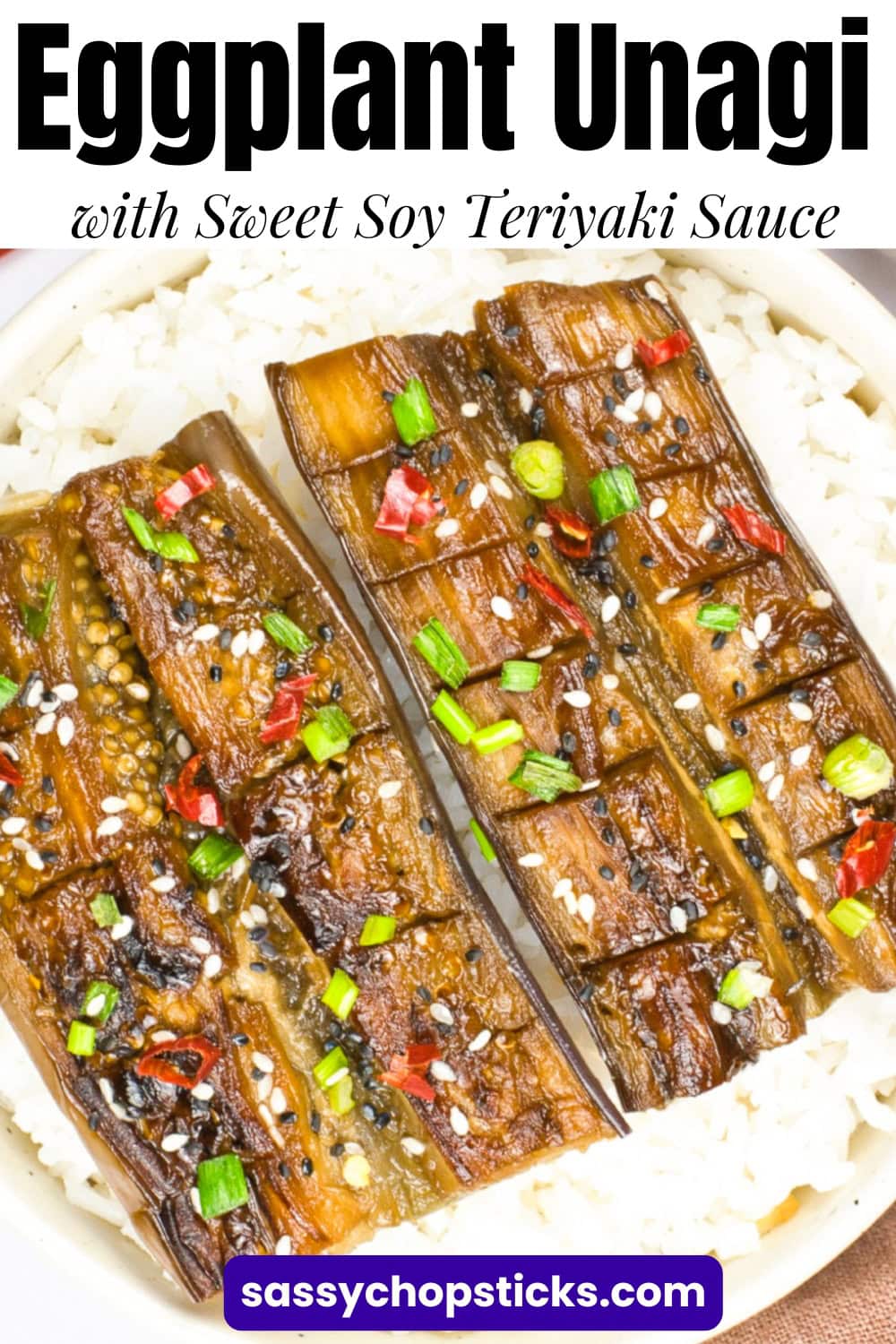
There’s something incredibly comforting about a warm rice bowl topped with a glossy, sweet-savory sauce. This eggplant unagi recipe brings the flavors of the classic Japanese unagi don, traditionally made with grilled eel, into a simple and satisfying vegan dish.
Instead of eel, tender eggplant is cooked until soft and caramelized, then glazed with a rich vegan unagi sauce made from soy sauce, teriyaki, and savory seasonings.
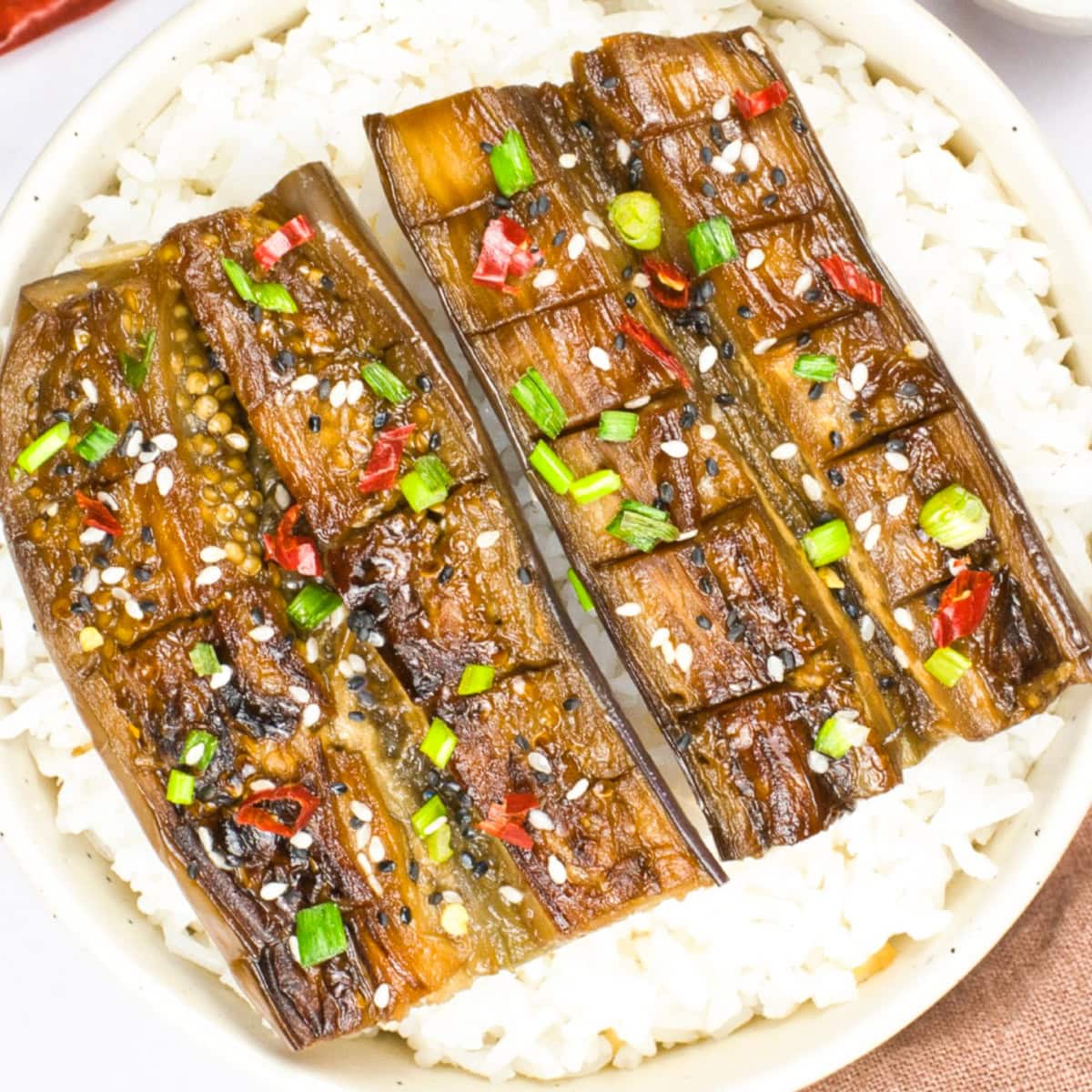
Many people ask, “Is eel sauce vegetarian?” Traditional versions sometimes include fish, but this recipe keeps it fully plant-based while delivering the same rich, umami flavor. It’s a delicious way to enjoy vegan unagi, and it can even be used for creative dishes like eggplant eel sushi or unagi eggplant nigiri.
Best of all, this eggplant unagi is easy, quick, and incredibly delicious. With just a few ingredients and minimal cooking time, you can turn simple eggplant into a flavorful dish everyone will love.
Ingredients for Eggplant Unagi
Every ingredient in this vegan unagi eggplant dish contributes to the dish’s iconic sweet-savory flavor and silky texture.
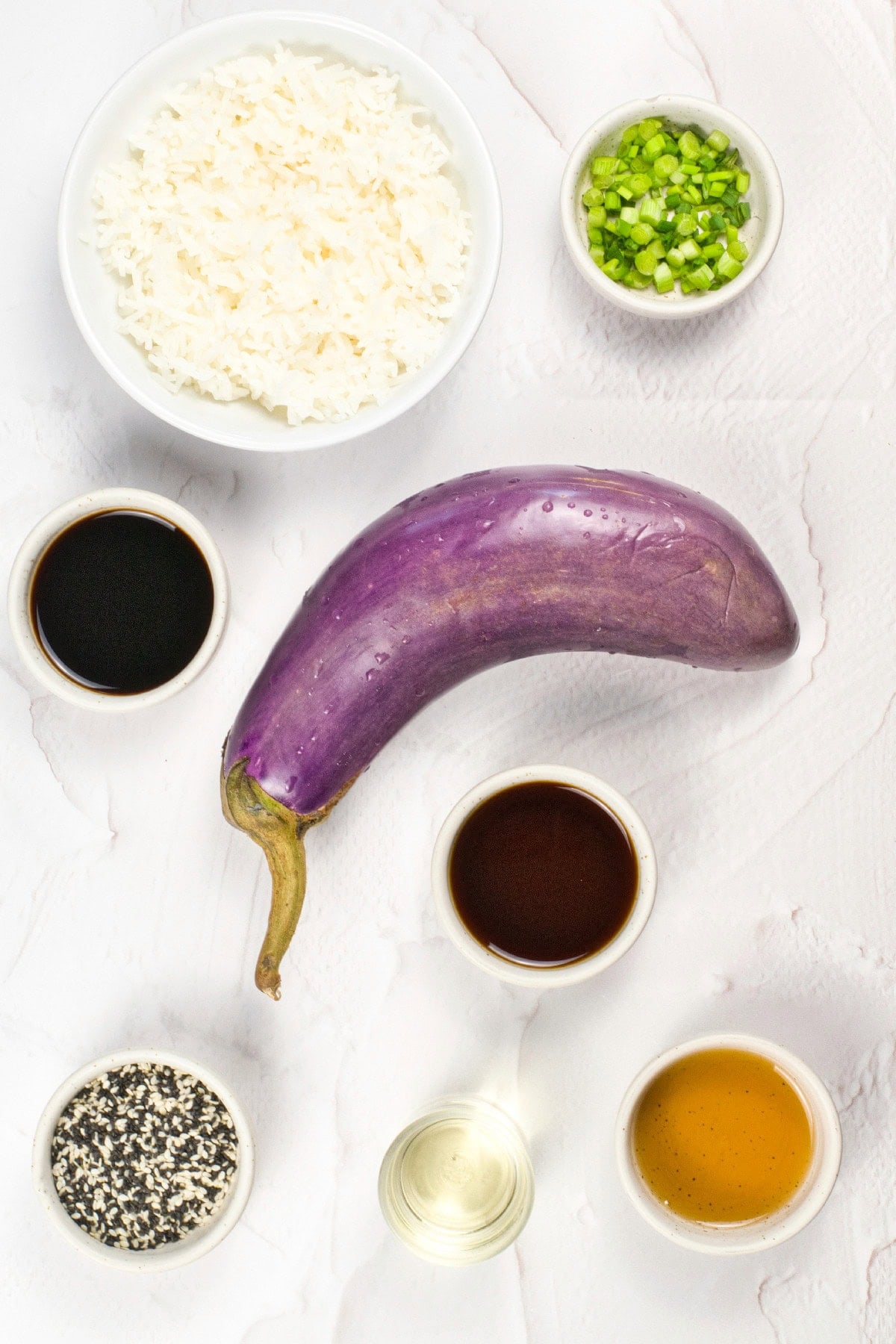
- Eggplant: A large eggplant becomes the star of the dish. When cooked properly, eggplants develop a tender, almost buttery texture that beautifully mimics grilled eel.
- Spring Onions: Finely chopped spring onions add freshness and a mild onion flavor, balancing the sauce’s richness.
- Steamed Rice: Warm rice forms the base of this comforting eggplant donburi, soaking up every drop of sauce.
- Sesame Seeds: A sprinkle of sesame seeds adds nuttiness and a subtle crunch to finish the bowl.
- Vegan Soy Sauce: Soy sauce brings saltiness and deep umami, forming the backbone of the vegan unagi sauce.
- Teriyaki Sauce: Teriyaki adds sweetness and glossy richness, creating the signature sweet-savory glaze associated with unagi sauce.
- Vegan Fish Sauce: This ingredient enhances the sauce’s umami depth, helping the vegan eel flavor feel more authentic.
- Vegetable Oil: A little oil helps the eggplant cook evenly over medium heat, allowing it to caramelize and develop flavor.
How to Make Eggplant Unagi
This simple and satisfying recipe comes together quickly and creates a beautiful vegan unagi don that feels just like a classic Japanese comfort meal.
Pan-Cooked Method
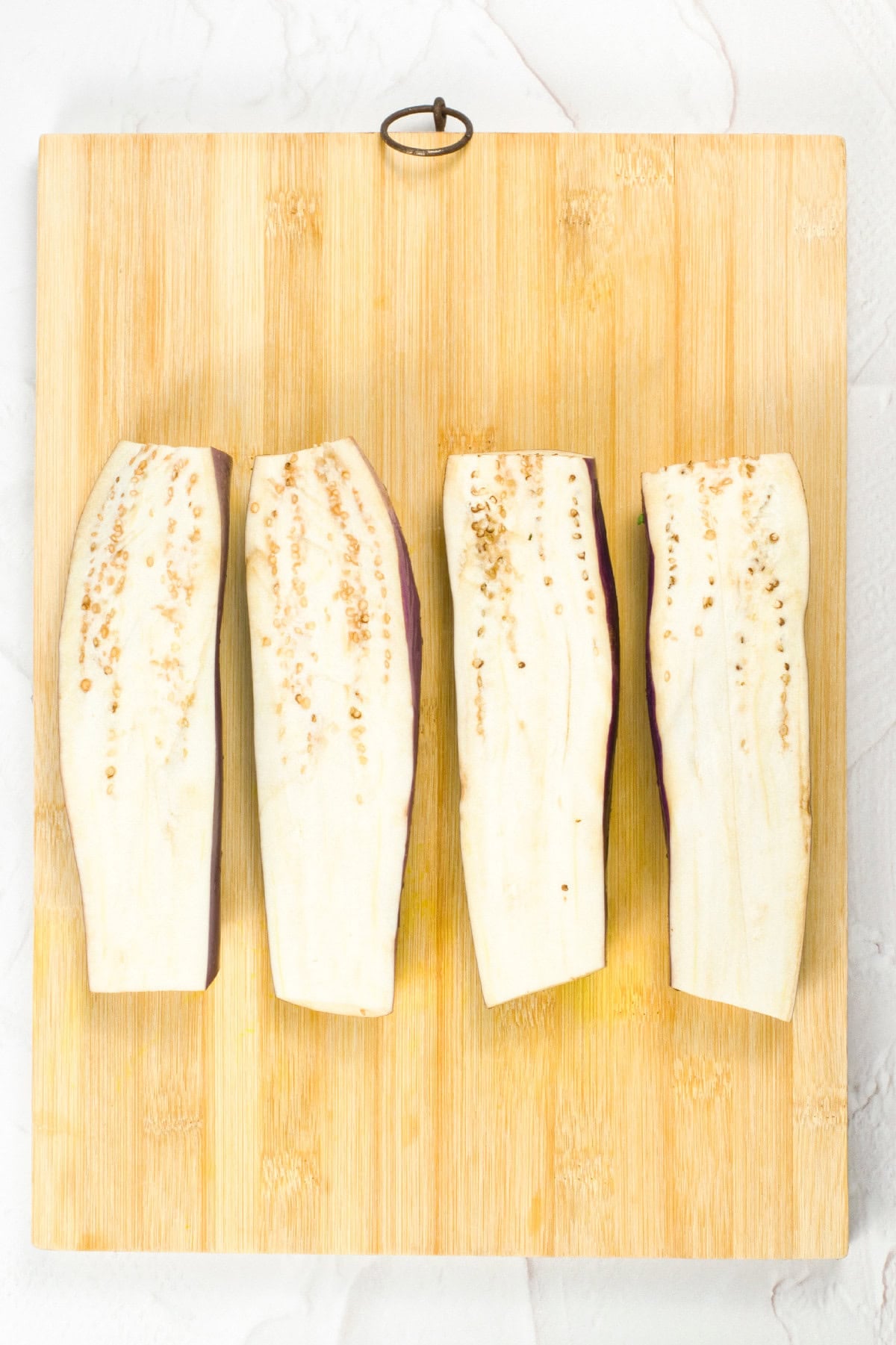
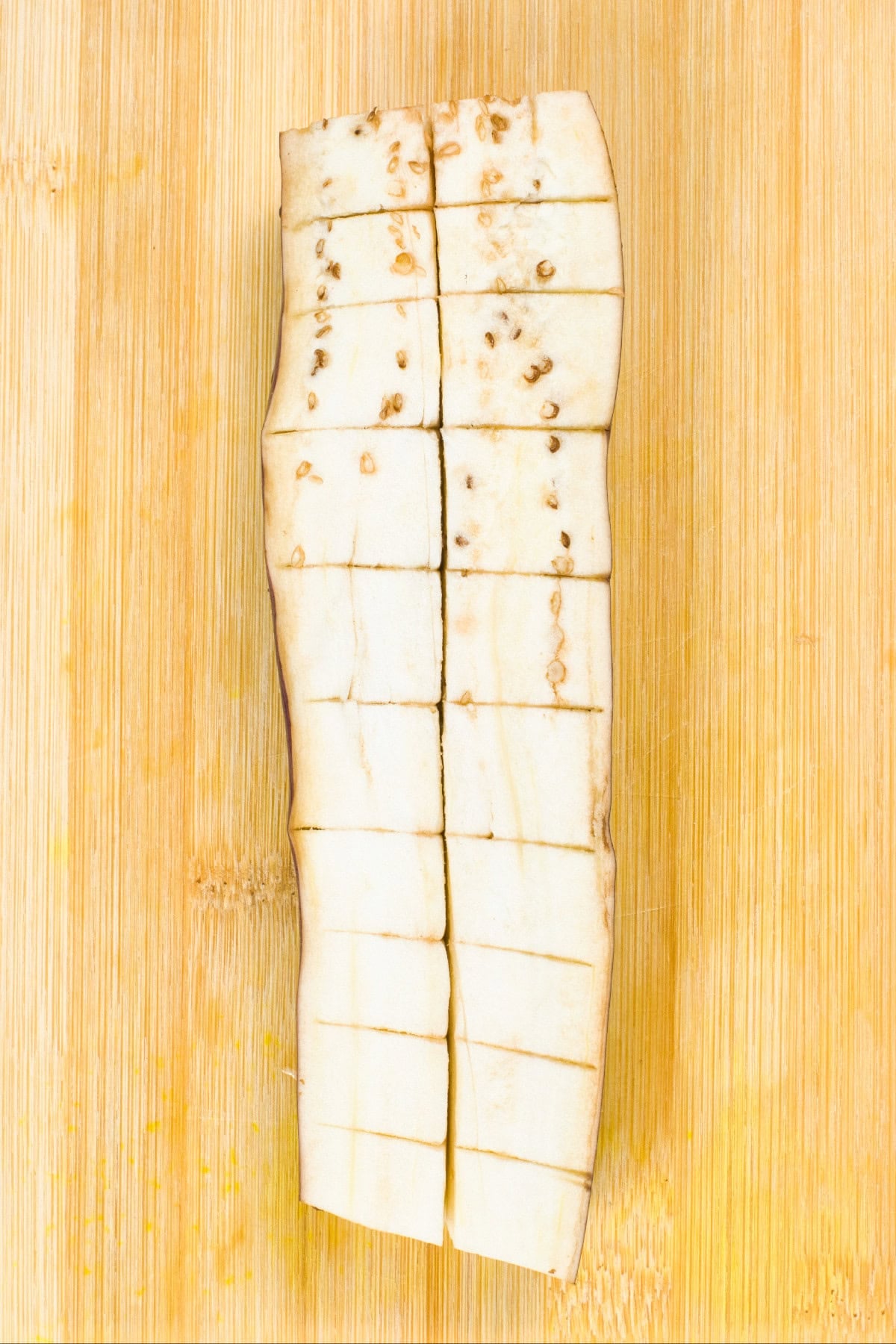
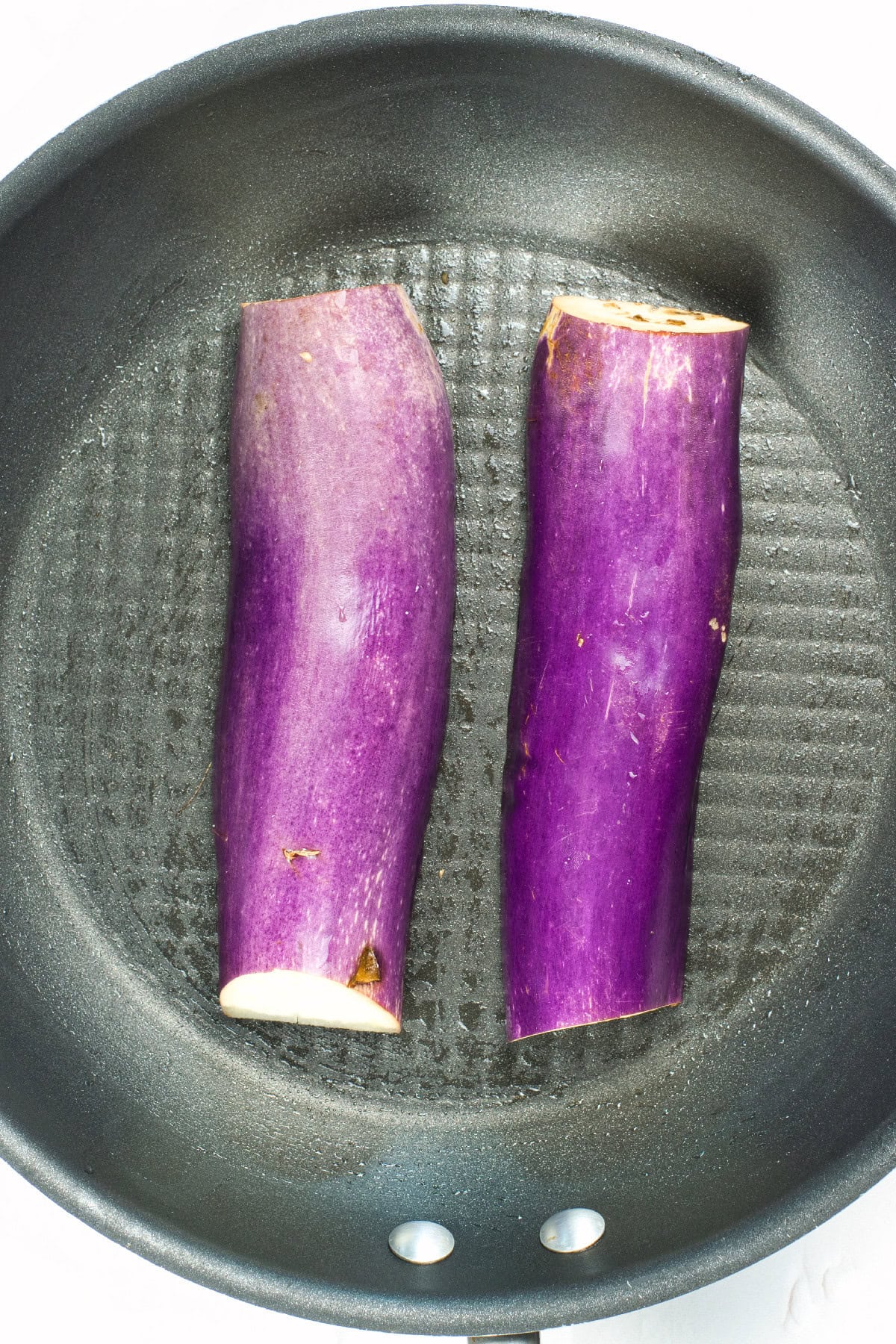
Prepare the Eggplant: Start by slicing the eggplant lengthwise into long strips that resemble traditional unagi fillets. Lightly score the flesh in a crosshatch pattern without cutting through the skin. This simple step helps the eggplant cook evenly and allows the vegan unagi sauce to soak in, enhancing flavor.
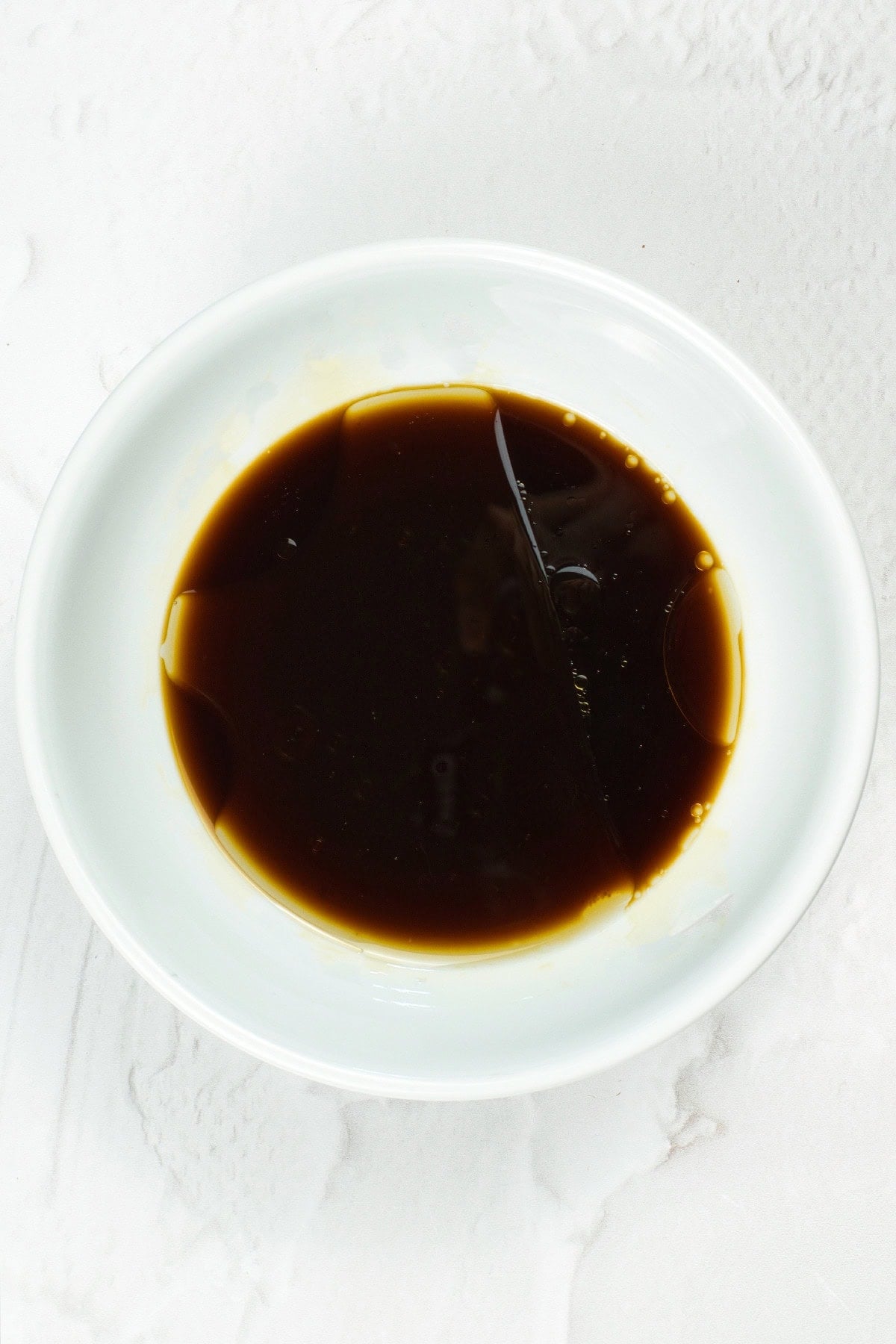
Make the Marinade: In a small bowl, whisk together vegan soy sauce, teriyaki sauce, and vegan fish sauce to create a rich, savory marinade similar to classic unagi sauce. Brush the mixture generously over the eggplant strips, coating both sides so they absorb the sweet, savory flavors.
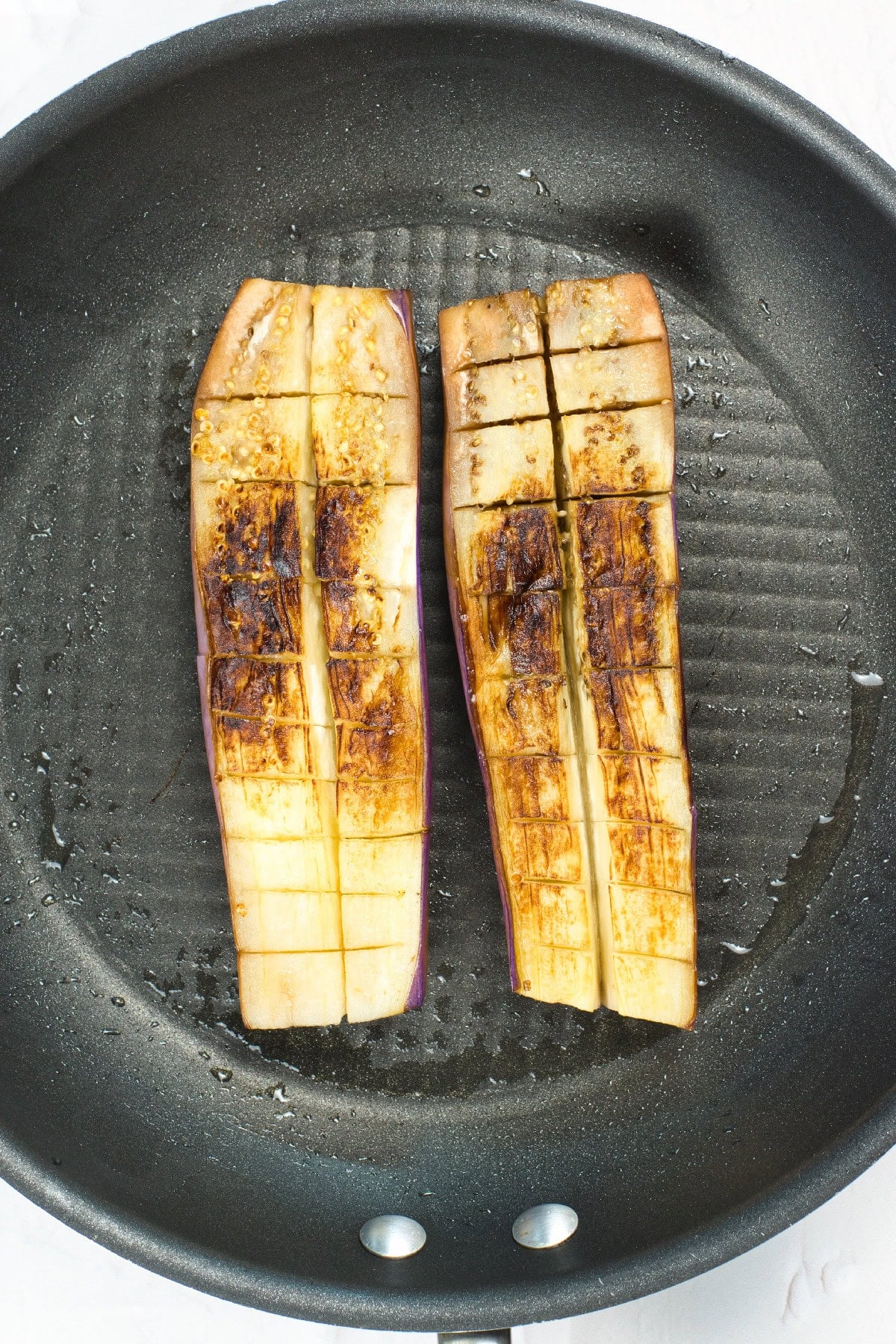
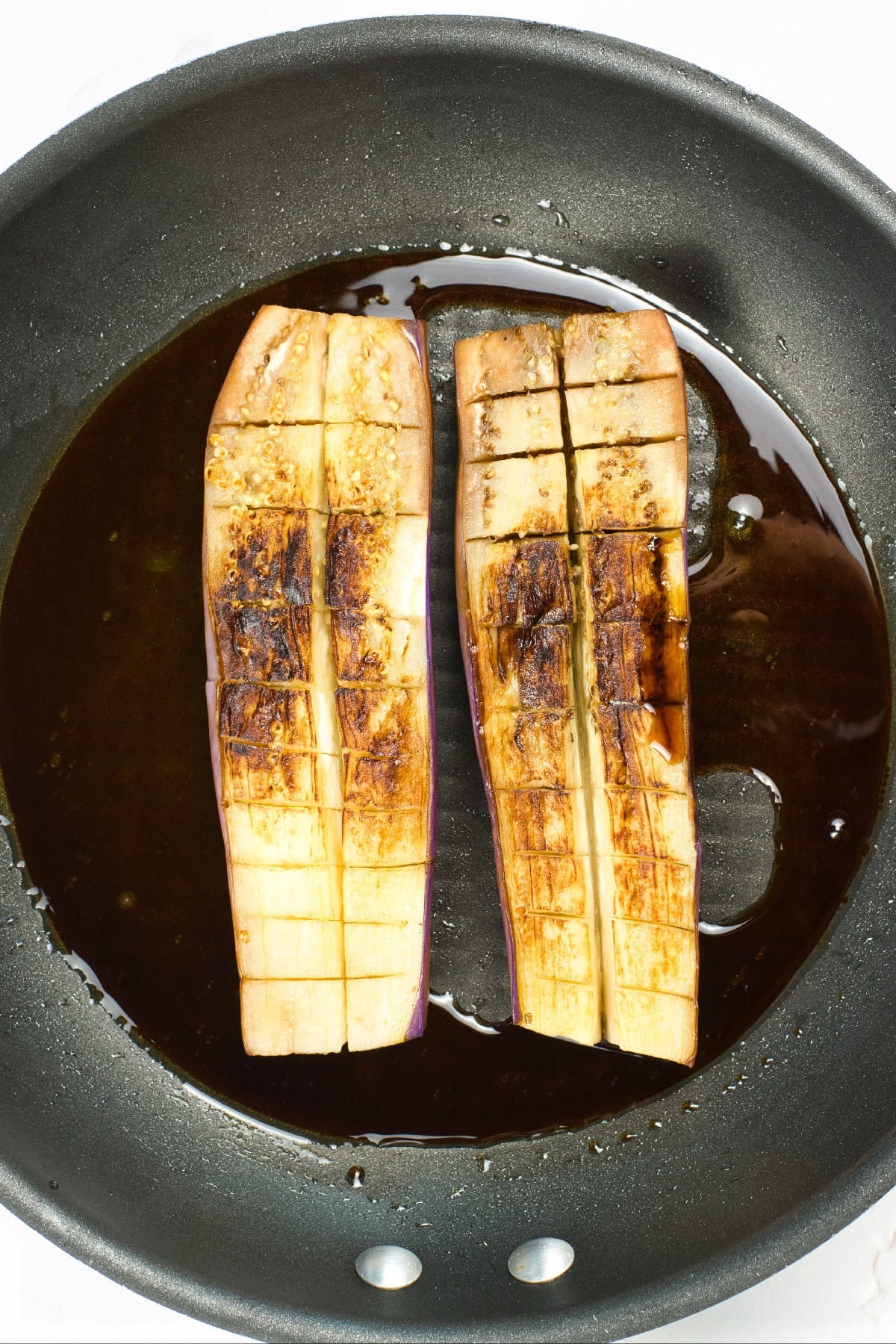
Pan Cook the Eggplant: Heat a thin layer of vegetable oil in a non-stick pan over medium heat. Place the eggplant strips, skin-side up, in the pan and cook until the flesh is golden and tender.
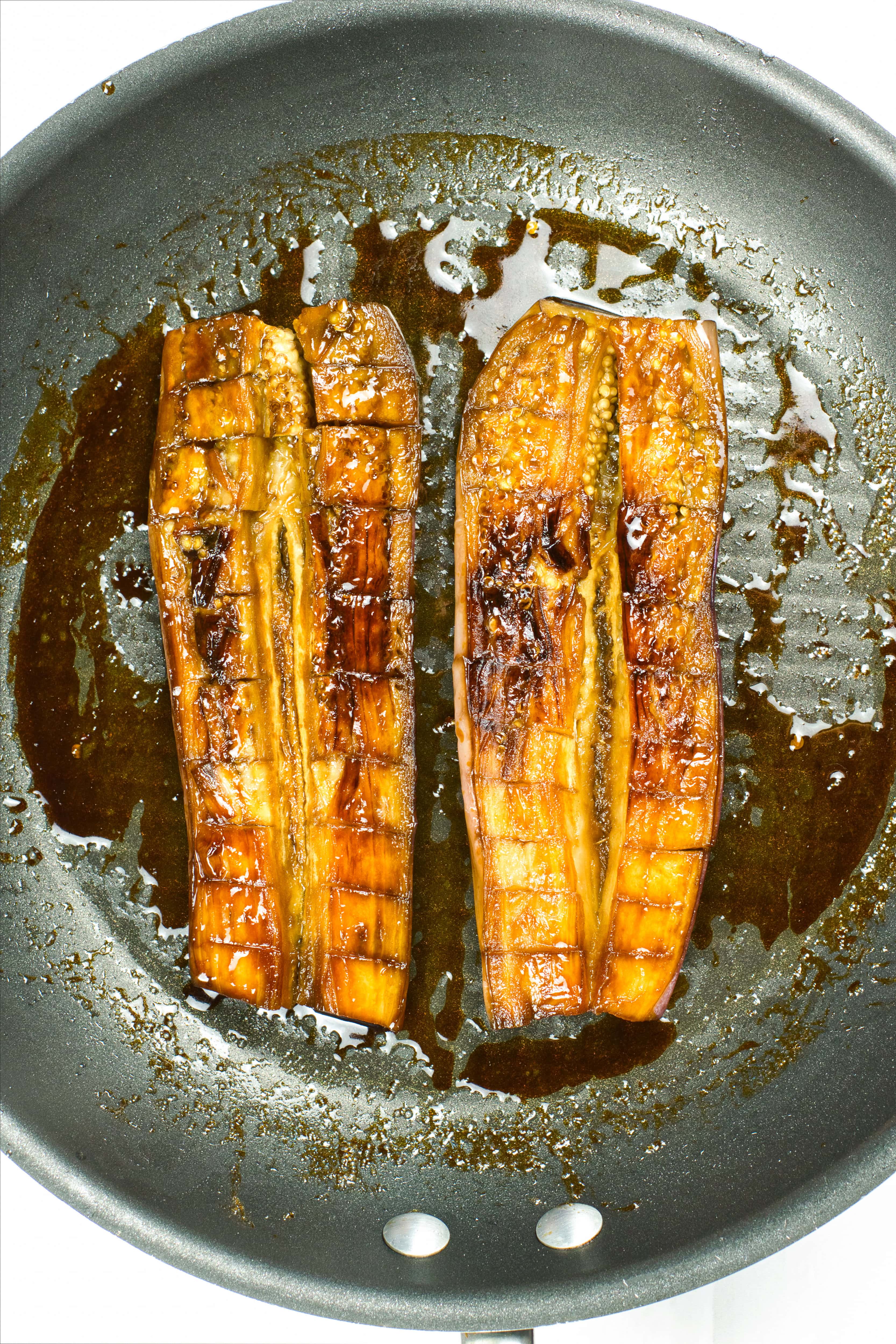
Flip the strips and continue cooking until the skin side lightly crisps. Brush or spoon more marinade into the pan as the eggplant cooks so the sauce thickens and coats the surface with a glossy glaze.
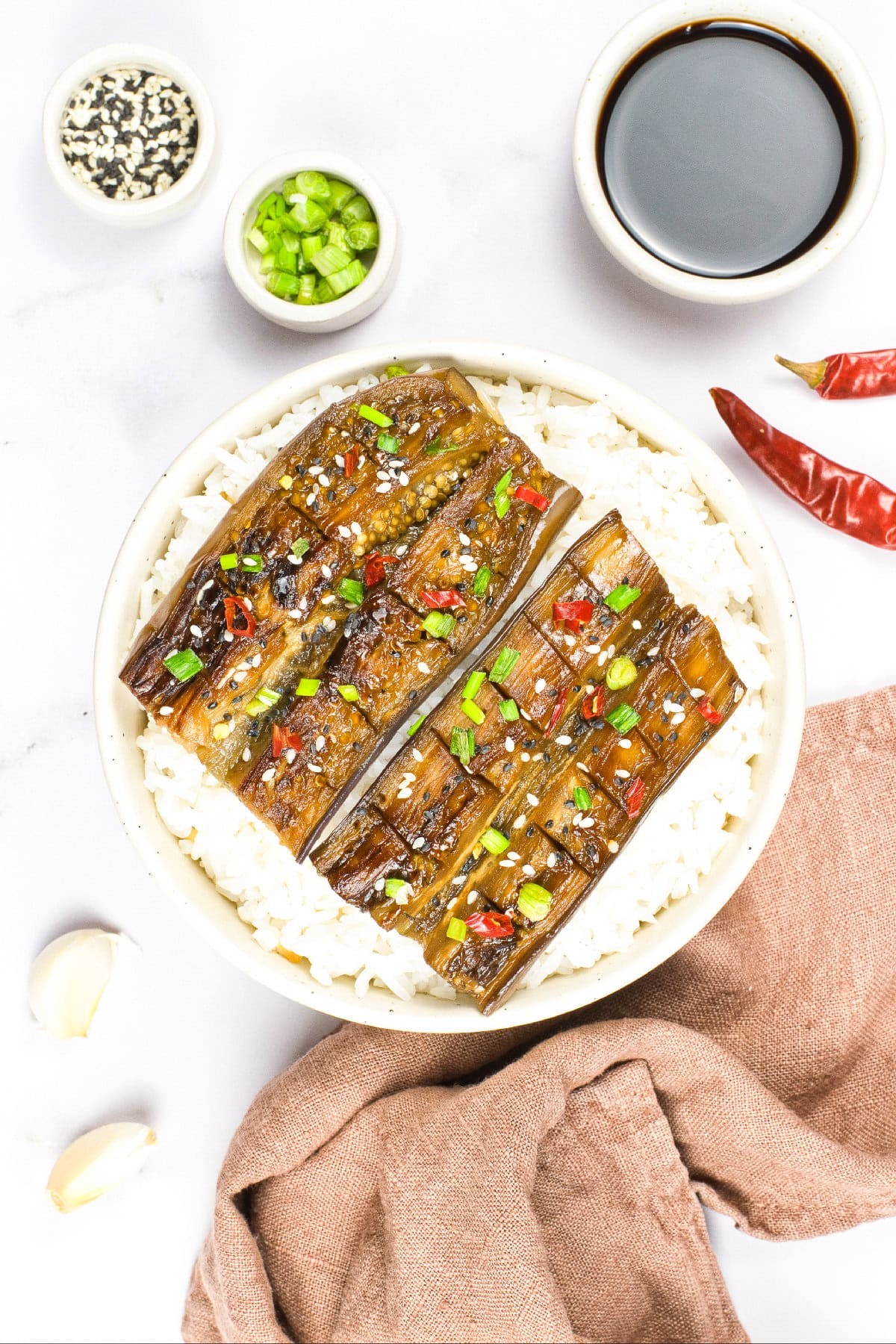
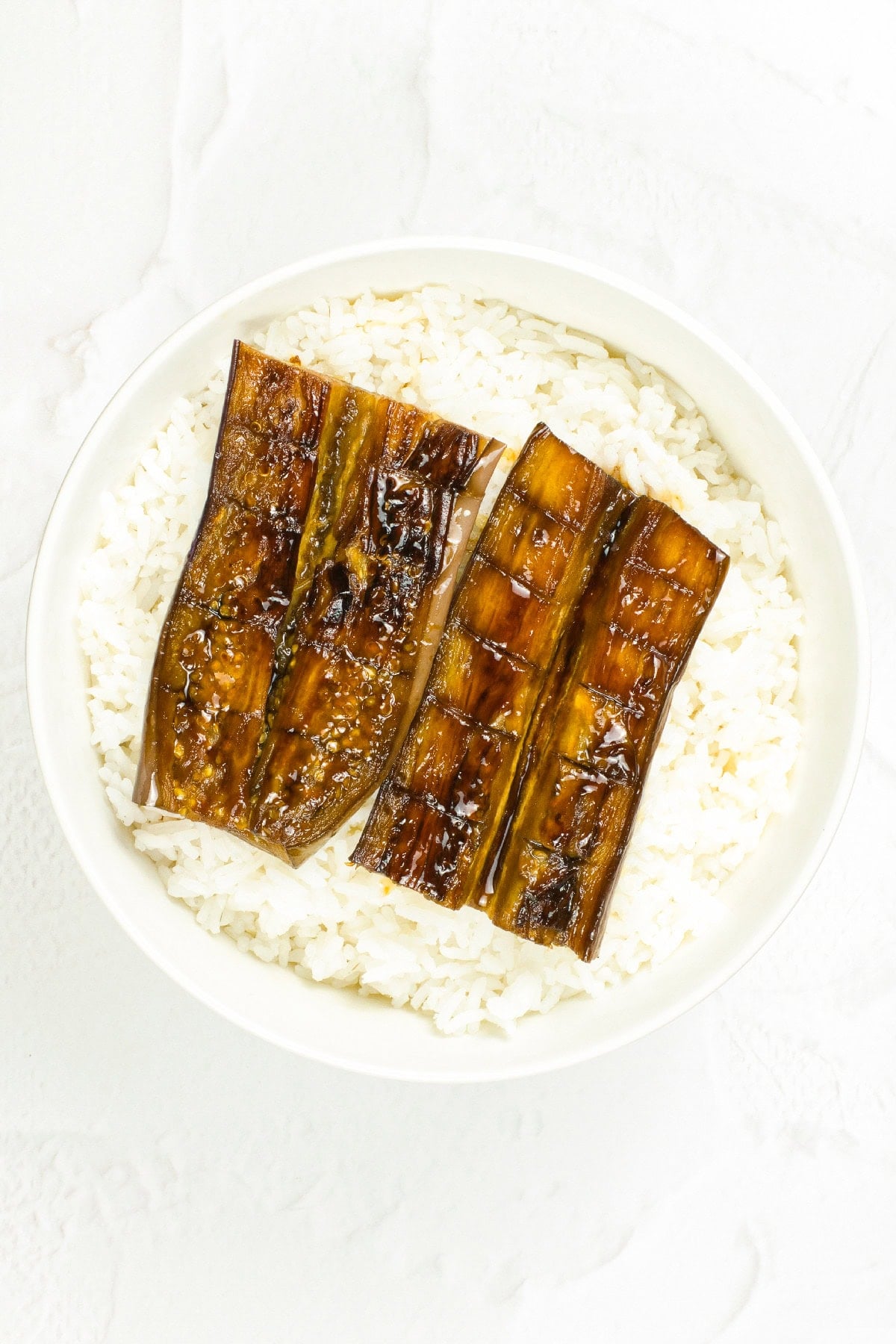
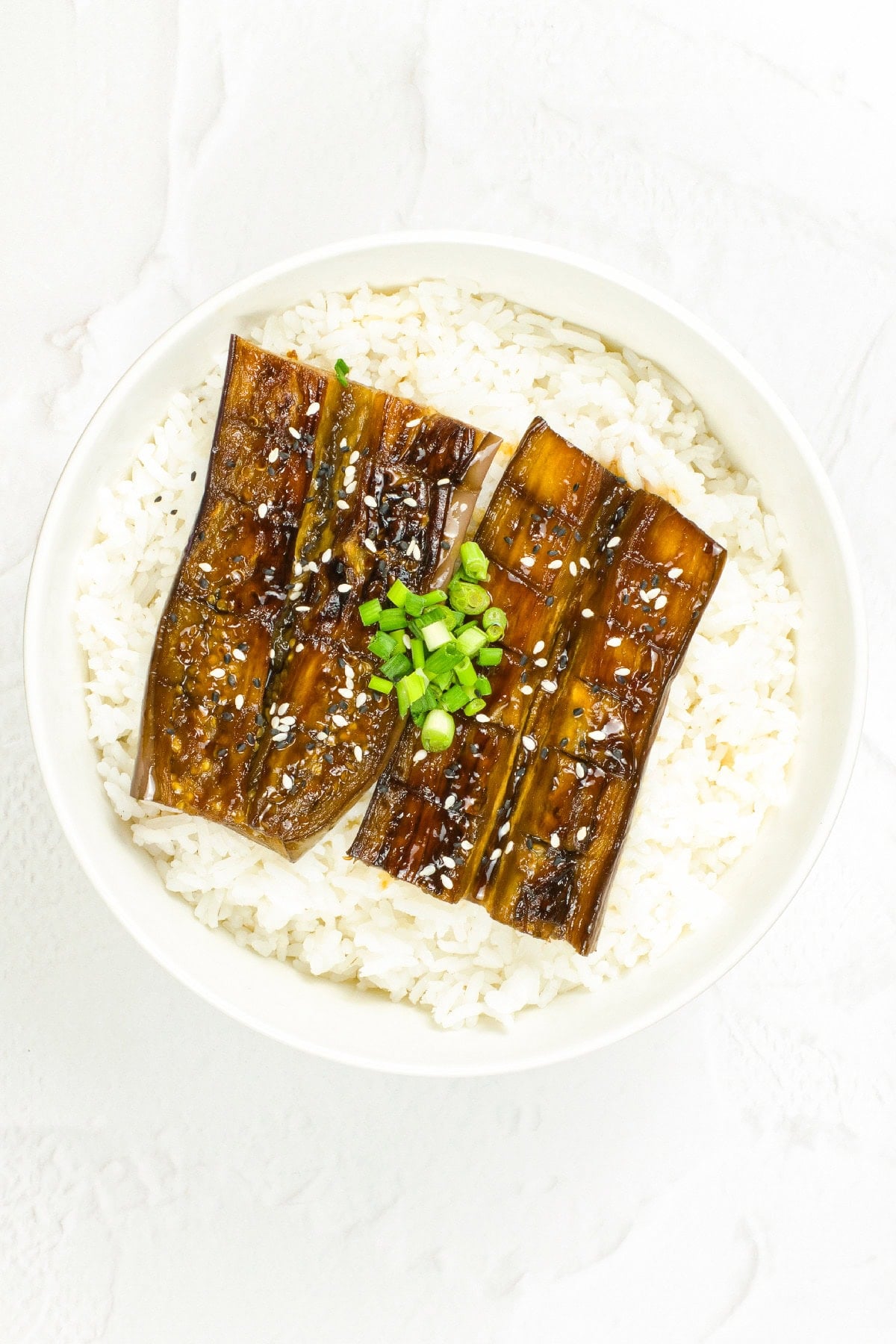
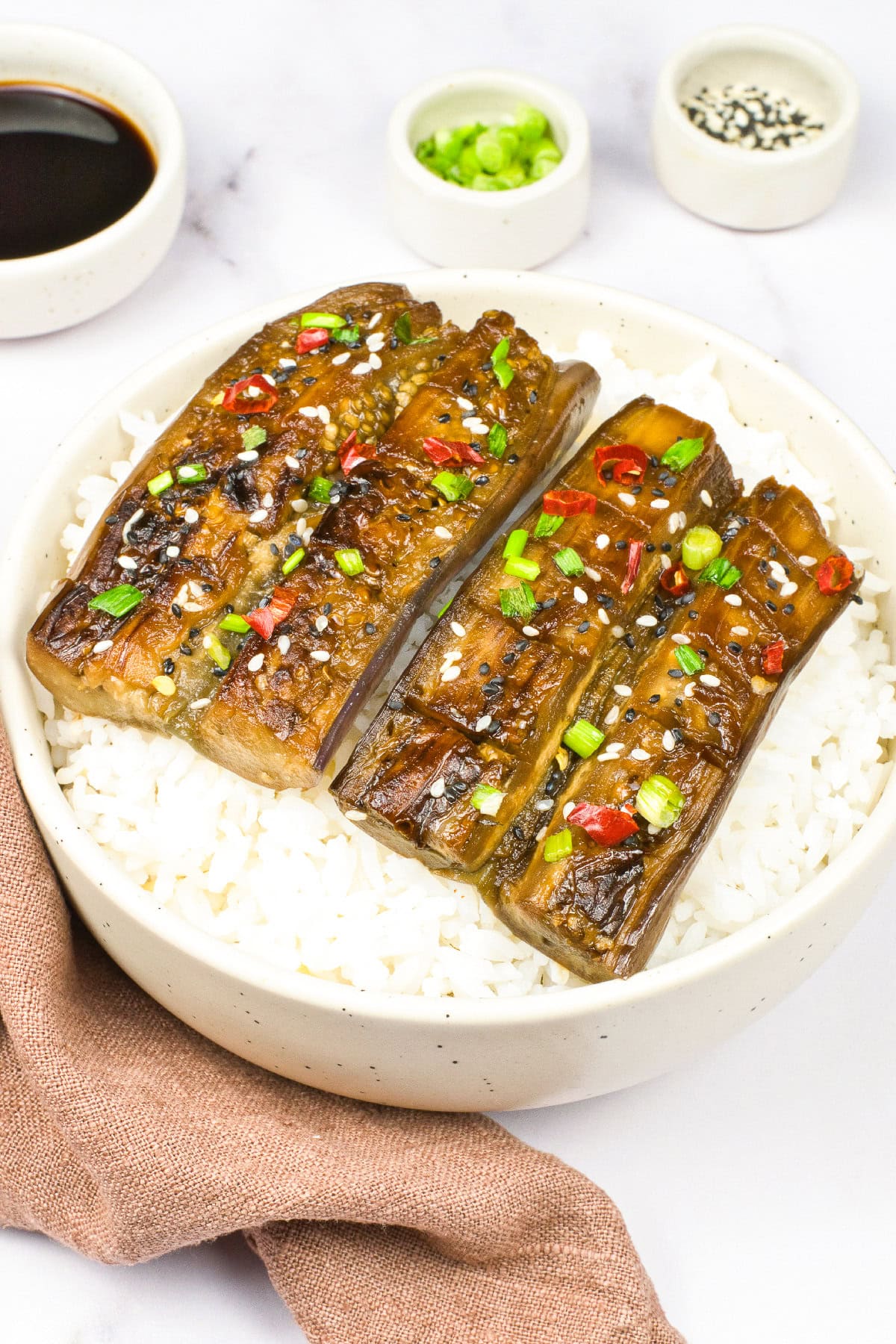
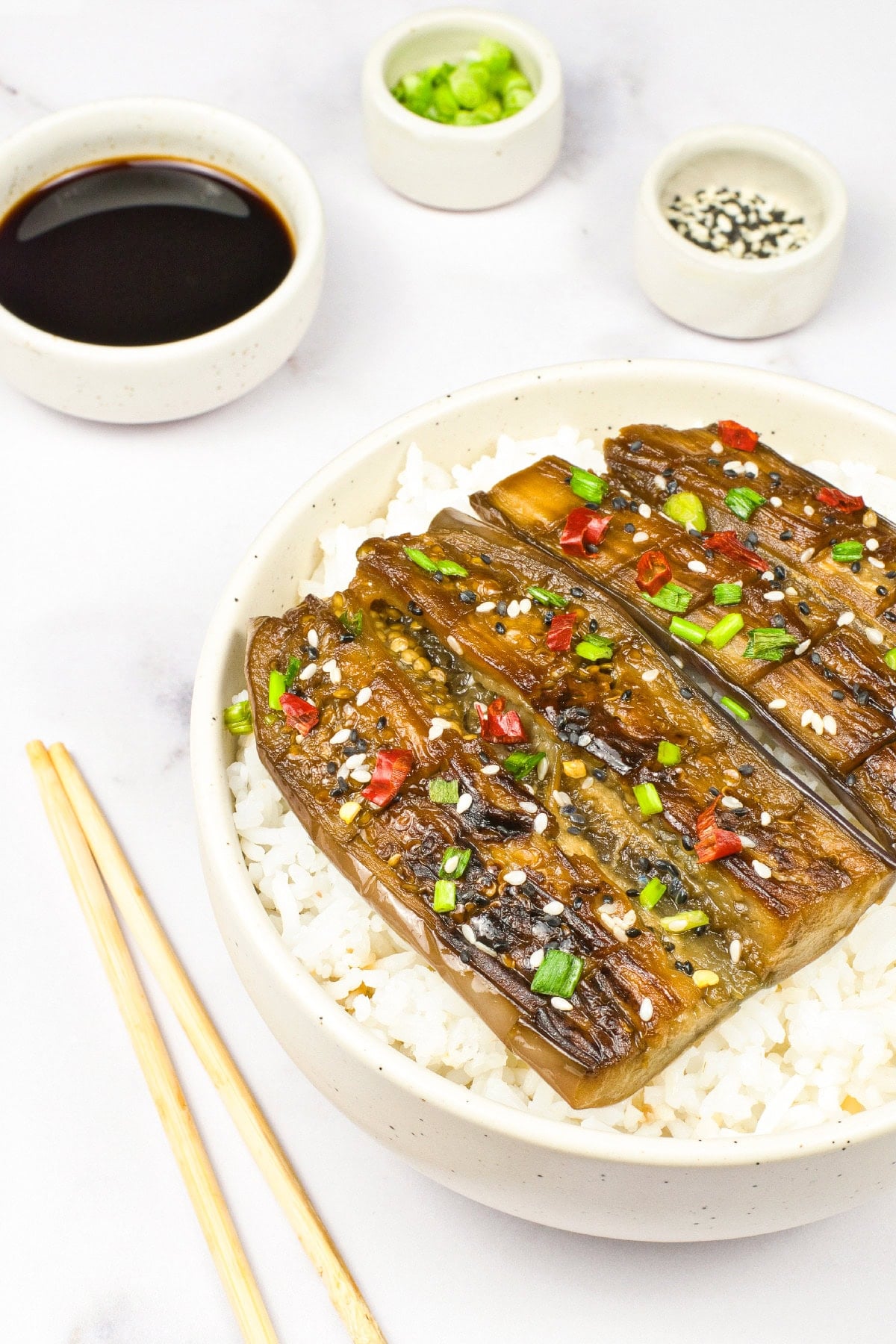
Serve the Eggplant Unagi: Once the eggplant unagi is tender and caramelized, transfer it to a bowl of warm rice. Spoon any remaining sauce over the top, then finish with chopped spring onions and a sprinkle of sesame seeds for a flavorful vegan unagi don.
Steamed Then Pan-Finished Method:
For an extra tender texture, you can steam the prepared eggplant strips first.
After slicing and scoring the eggplant, place the strips in a steamer over boiling water and steam for a few minutes until they begin to soften. Remove them from the steamer, brush them with the soy sauce, teriyaki, and vegan fish sauce mixture, then cook them in a lightly oiled pan over medium heat until the marinade thickens, becomes sticky, and caramelizes.
This method creates an especially silky texture while still giving the eggplant that glossy vegan eel finish.
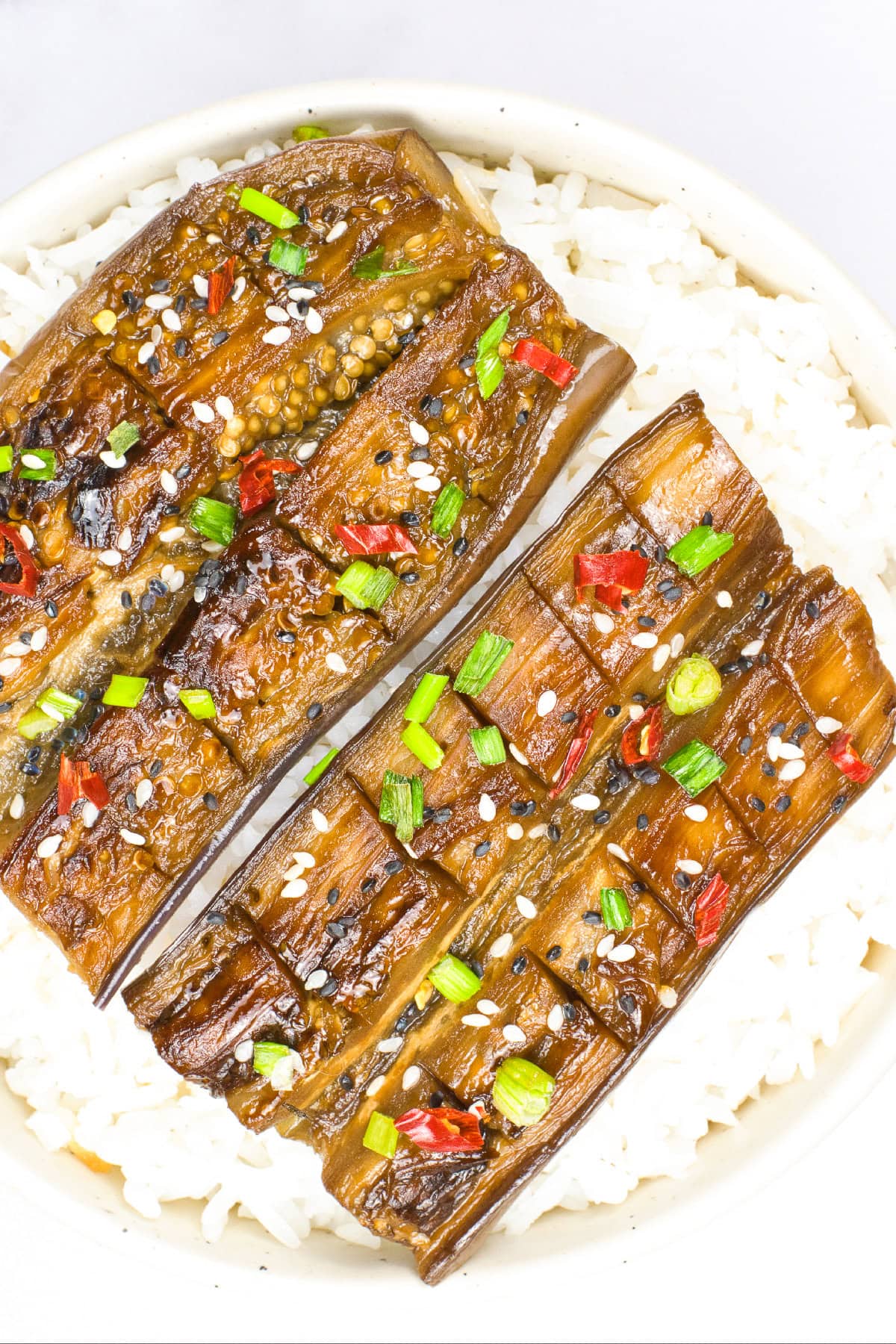
Serve the cooked eggplant unagi over rice, garnished with spring onions and sesame seeds.
Pro Tips for the Best Eggplant Unagi
Making the perfect eggplant unagi recipe is surprisingly easy, but a few tips can help elevate the flavor and texture.
Choose eggplants that feel firm and glossy. Fresh eggplants absorb the sauce beautifully and cook more evenly. While standard eggplant works well, Chinese eggplant is also excellent for this dish because its thinner skin and delicate flesh become incredibly tender.
Cooking over medium heat is key. Too high a temperature may burn the sauce before the eggplant fully softens. Allow the eggplant to slowly caramelize so it develops a rich flavor, similar to grilled unagi.
If you enjoy extra sauce, double the vegan unagi sauce mixture. The sauce soaking into the rice bowl makes every bite even more flavorful.
Storing and Reheating Eggplant Unagi
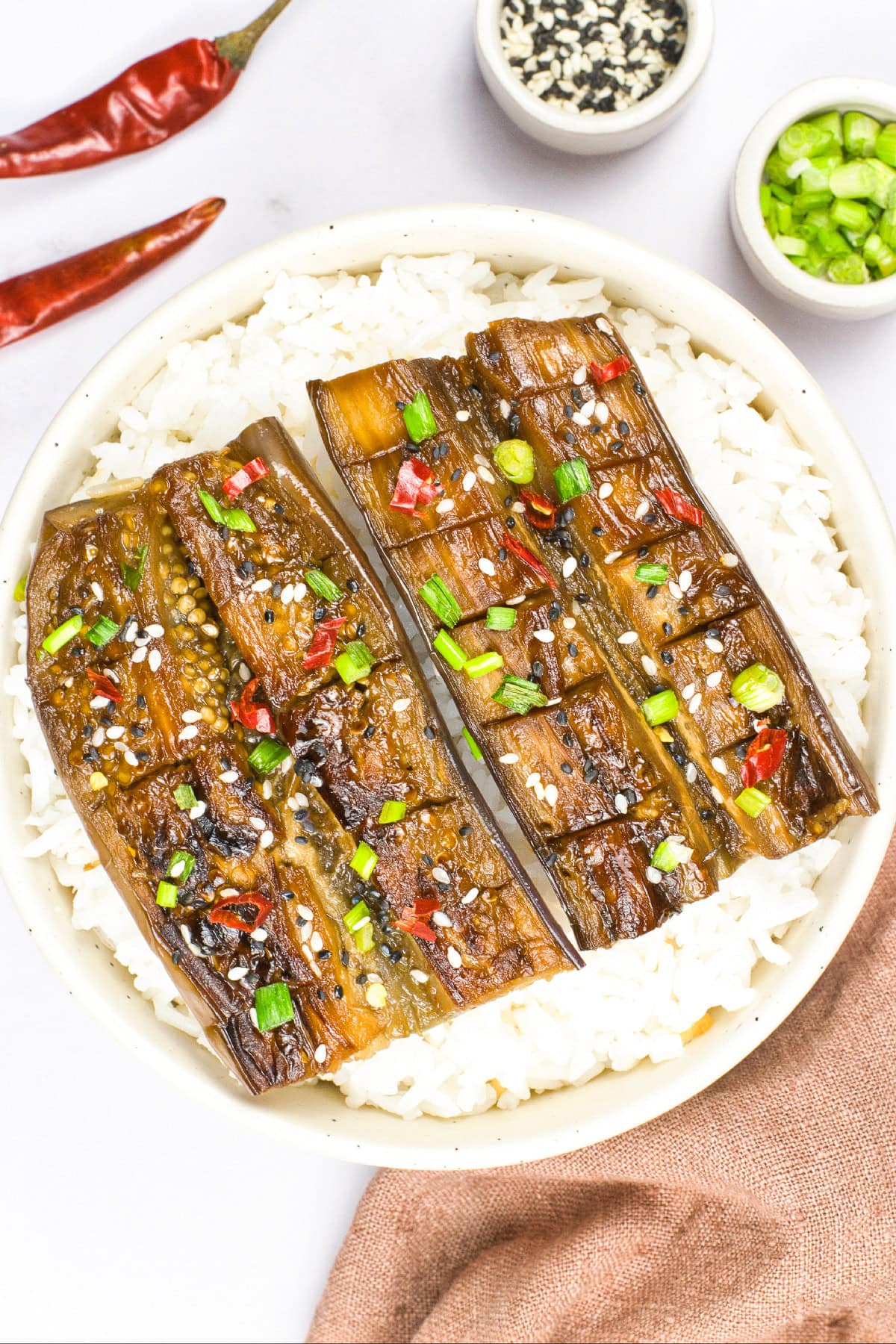
This eggplant unagi keeps well and can easily become part of your weekly vegan meal prep.
Store leftover eggplant and sauce in an airtight container in the refrigerator for up to three days. Keep the rice stored separately, if possible, to maintain the best texture.
When reheating, warm the eggplant gently in a skillet over medium heat with a small splash of water. This helps loosen the sauce and keeps the eggplant tender.
You can also microwave it for a quick option, though stovetop reheating usually produces the best texture and flavor.
Variations for Vegan Unagi Eggplant
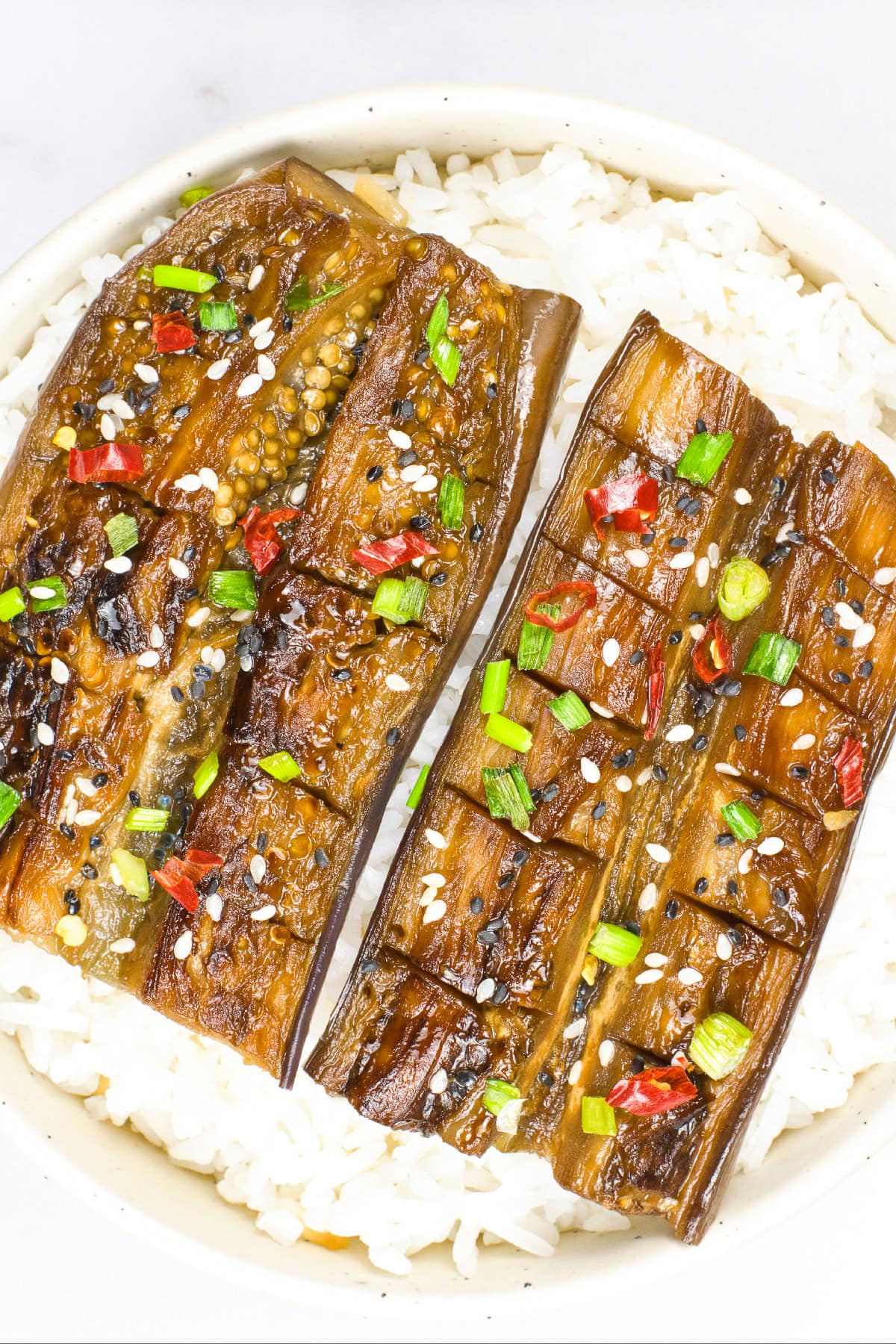
One of the reasons people love this recipe is its flexibility. With a few small adjustments, you can turn this dish into several creative vegan Japanese eggplant recipes.
Try serving the glazed eggplant as eggplant eel sushi by placing thin slices over sushi rice to create unagi eggplant nigiri. The sweet soy glaze pairs beautifully with vinegared rice.
You can also turn it into an eggplant poke bowl by adding cucumber, avocado, and shredded carrots. The glossy vegan teriyaki sauce becomes a delicious dressing for the bowl.
For a smokier flavor, try grilling or broiling the eggplant before brushing it with the sweet soy glaze.
Pairing Dishes with Eggplant Unagi Don
This comforting eggplant donburi pairs well with many light Japanese side dishes.
A simple miso soup balances the richness of the sweet, savory glaze. Pickled vegetables add brightness and contrast to the soft eggplant and warm rice.
You can also serve it with a crisp cucumber salad or steamed edamame for a refreshing side that complements the vegan unagi flavors.
For sushi nights at home, the eggplant can even be used as a topping for unagi eggplant recipe-inspired sushi rolls.
Final Thoughts
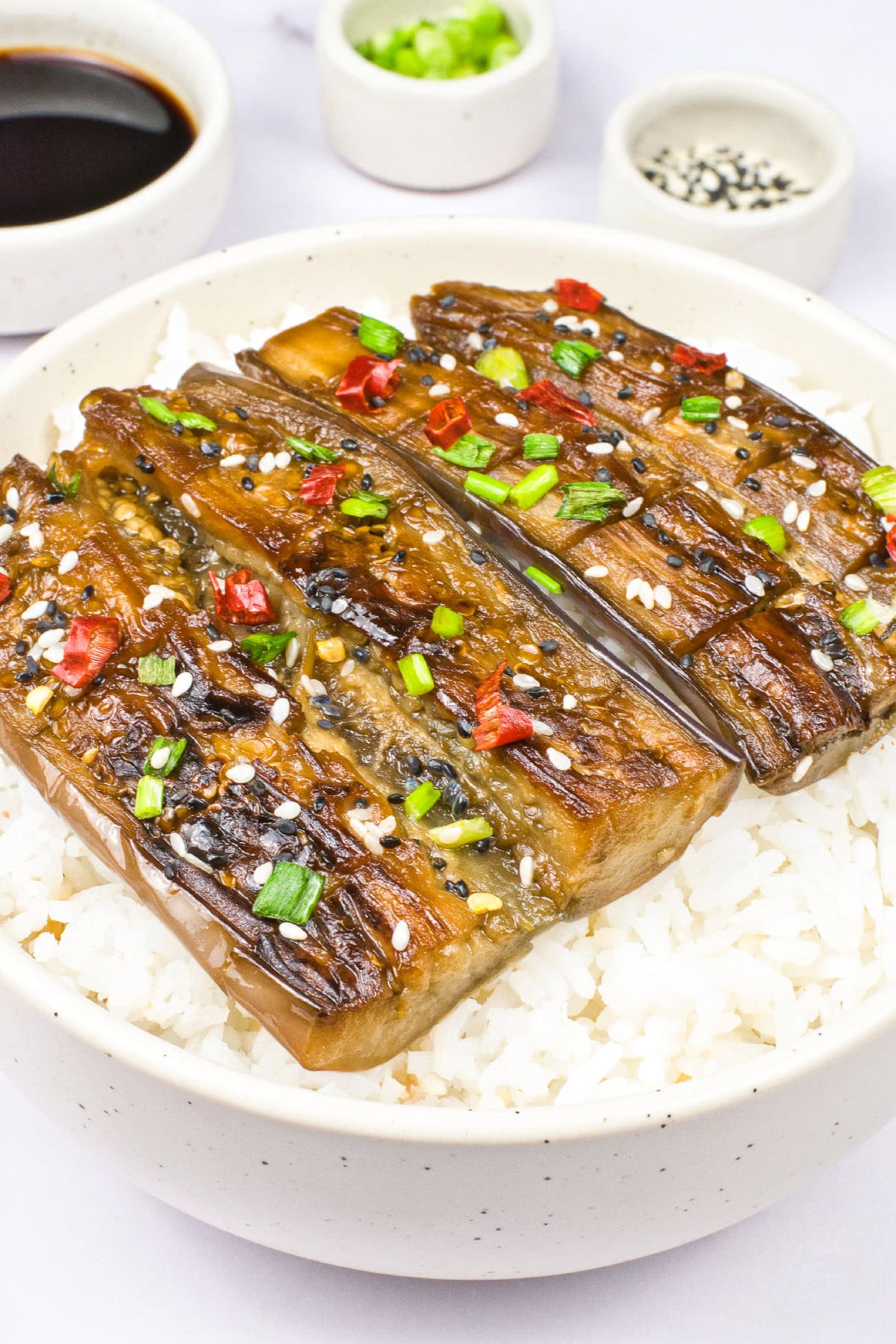
This eggplant unagi recipe is proof that plant-based cooking can recreate the comforting flavors of classic Japanese dishes in a wonderfully simple way. Tender eggplant, glossy vegan unagi sauce, and fluffy rice come together to create a satisfying rice bowl that feels both nostalgic and modern.
Whether you’re exploring mock eel recipe ideas, looking for new vegan Japanese eggplant recipes, or simply craving a cozy eggplant donburi, this dish is a quick and delicious solution.
Once you try this vegan unagi eggplant, you may find it becomes a regular part of your home cooking rotation.
FAQ
Eggplant unagi is a plant-based alternative to traditional unagi, or grilled eel. In this vegan version, eggplant is cooked until tender and glazed with a sweet, soy sauce-based unagi sauce, creating a texture and flavor similar to grilled eel.
Traditional unagi sauce can sometimes contain fish ingredients. However, many versions, including this vegan unagi sauce, use soy sauce, sugar, and seasonings to create the same sweet, savory flavor without animal products.
A typical vegan eel sauce combines soy sauce, teriyaki sauce, and other umami-rich ingredients. When simmered over medium heat, the mixture thickens into a glossy glaze perfect for eggplant or tofu.
Yes, Chinese eggplant works beautifully in this eggplant unagi recipe. Its thinner skin and tender flesh make it ideal for absorbing the sauce and creating a silky texture.
Vegan unagi don is a plant-based version of unagi don, a classic Japanese dish of eel in a bowl. Instead of eel, glazed eggplant is served over rice with sesame seeds and green onions, creating a flavorful eggplant donburi.
Eggplant Unagi Recipe with Sweet Soy Teriyaki Sauce
Ingredients
- 1 large Eggplant
- 2 Spring Onions finely chopped
- Steamed Rice for serving
- Sesame Seeds for garnish
- 2 tablespoons Vegan Soy Sauce
- 2 tablespoons Teriyaki Sauce
- 1 tablespoon Vegan Fish Sauce
- Vegetable Oil for cooking
Instructions
Pan-Cooked Method
- Prepare the Eggplant: Start by slicing the eggplant lengthwise into long strips that resemble traditional unagi fillets. Lightly score the flesh in a crosshatch pattern without cutting through the skin. This simple step helps the eggplant cook evenly and allows the vegan unagi sauce to soak in, enhancing flavor.
- Make the Marinade: In a small bowl, whisk together vegan soy sauce, teriyaki sauce, and vegan fish sauce to create a rich, savory marinade similar to classic unagi sauce. Brush the mixture generously over the eggplant strips, coating both sides so they absorb the sweet, savory flavors.
- Pan Cook the Eggplant: Heat a thin layer of vegetable oil in a non-stick pan over medium heat. Place the eggplant strips, skin-side up, in the pan and cook until the flesh is golden and tender. Flip the strips and continue cooking until the skin side lightly crisps. Brush or spoon more marinade into the pan as the eggplant cooks so the sauce thickens and coats the surface with a glossy glaze.
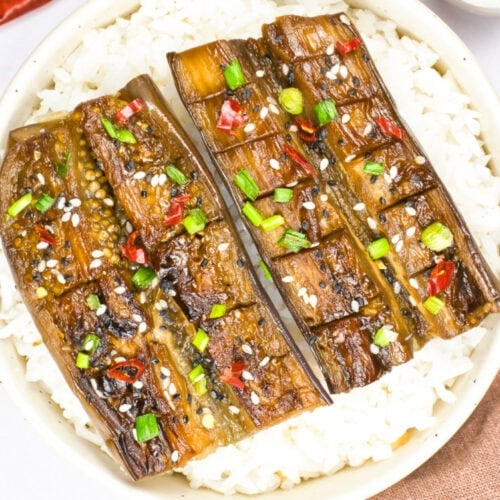
- Serve the Eggplant Unagi: Once the eggplant unagi is tender and caramelized, transfer it to a bowl of warm rice. Spoon any remaining sauce over the top, then finish with chopped spring onions and a sprinkle of sesame seeds for a flavorful vegan unagi don.
Steamed Then Pan-Finished Method:
- For an extra tender texture, you can steam the prepared eggplant strips first. After slicing and scoring the eggplant, place the strips in a steamer over boiling water and steam for a few minutes until they begin to soften.
- Remove the eggplants from the steamer, brush them with the soy sauce, teriyaki, and vegan fish sauce mixture, then cook them in a lightly oiled pan over medium heat until the marinade thickens, becomes sticky, and caramelizes.
- This method creates an especially silky texture while still giving the eggplant that glossy vegan eel finish. Serve the cooked eggplant unagi over rice, garnished with spring onions and sesame seeds.