
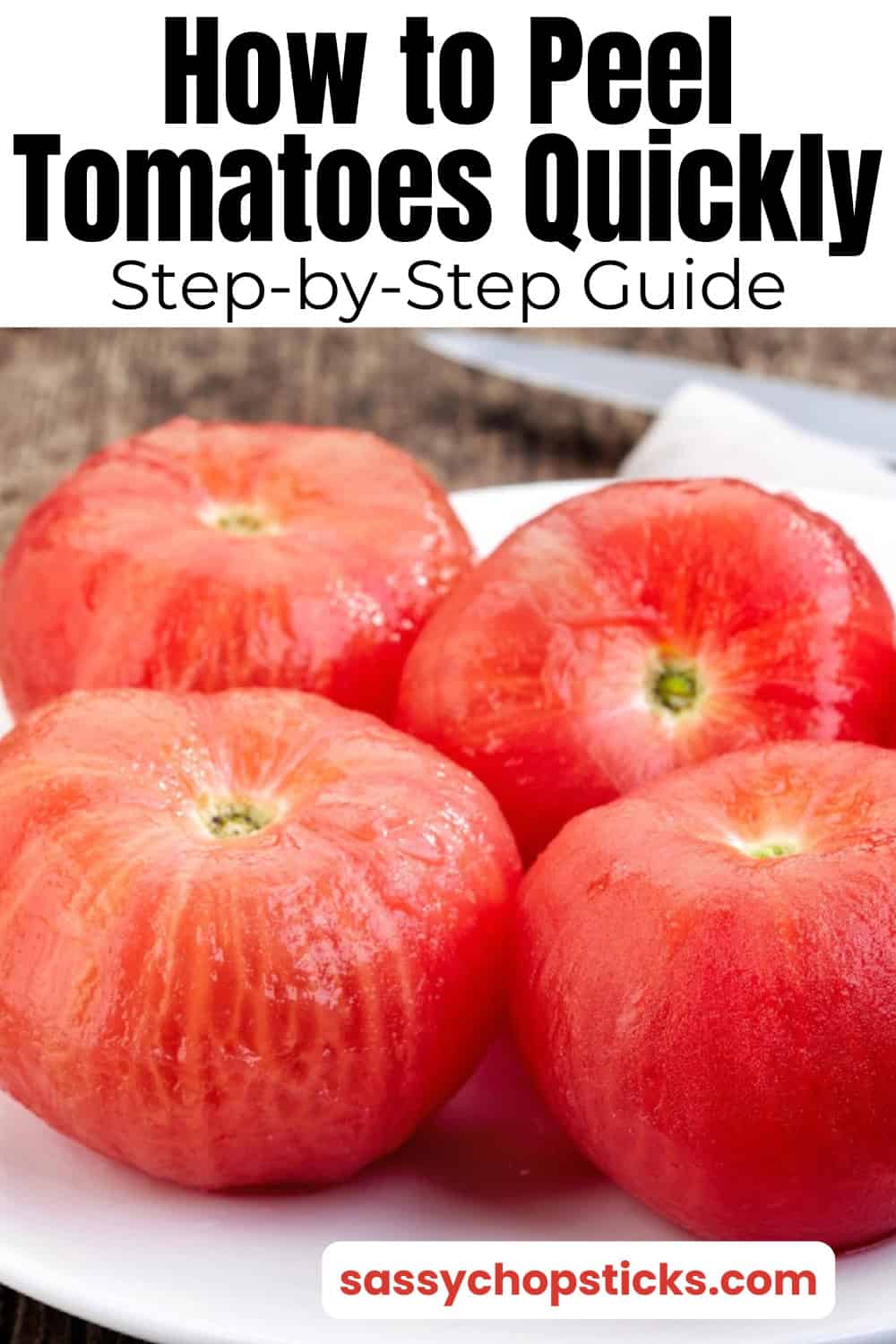
Fresh tomatoes are a versatile and useful ingredient in the kitchen. Whether you’re slicing them for a vibrant Caprese salad, blending them into a salsa, chopping them for a savory topping, or simmering them into a rich sauce, tomatoes are a go-to ingredient.
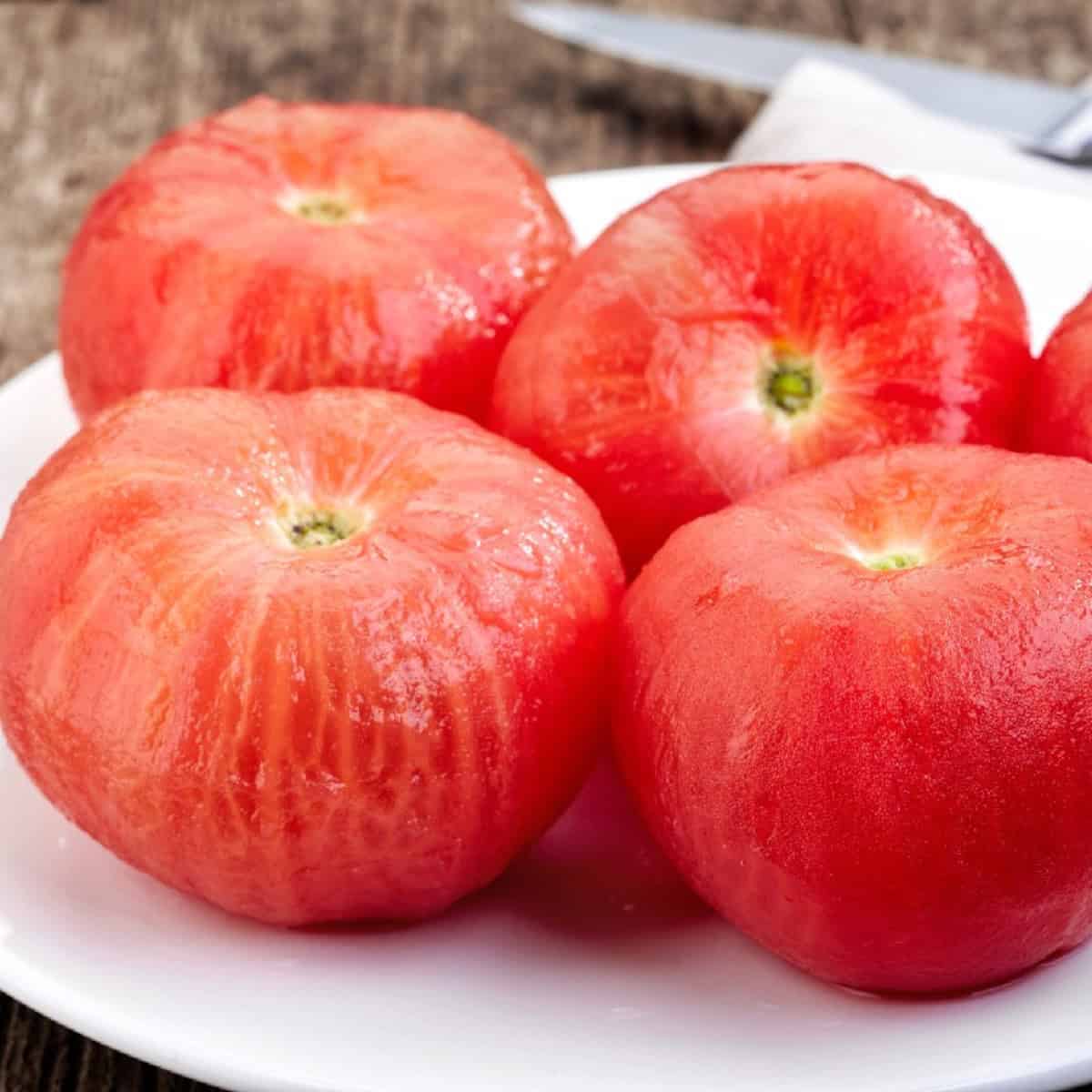
For many of these uses, leaving the skin on works just fine. But when it comes to creating silky soups or velvety sauces, removing the skin becomes essential. It may seem intimidating at first, but once you know how to peel tomatoes, the process becomes second nature.
Why peel tomatoes?
Peeling tomatoes is a great way to use fresh tomatoes in soups, salsas, sauces, and baked dishes. Tomato skins can be tough, chewy, and distracting in dishes where a smooth texture is key. Removing them improves both the texture and presentation of your meal.
With this method, you can use any fresh tomatoes. There’s no need to peel thinner-skinned grape tomatoes, cherry tomatoes, or thin-skinned heirloom tomatoes. But romas or beefsteak tomatoes are perfect for peeling.
Trying to peel tomatoes raw with a paring knife? You’ll likely waste a lot of good tomato flesh. The boiling method, by contrast, loosens the skin gently so it slips off with ease, leaving the juicy flesh intact and ready for use.
“I peel tomatoes if I’m looking for an entirely uniform, smooth texture in a meal. A gazpacho, for example, would benefit from a completely smooth texture, so I will take the extra step to peel my tomatoes for that dish.”
— Gen La Rocca, – Two Cloves Kitchen
Gather the necessary tools
Before diving into the tomato peeling process, ensure you have the following tools readily available:
- A large pot
- Water
- A large bowl
- Ice
- Fresh tomatoes
- A sharp knife
- Slotted spoon
- Kitchen towels
Having everything prepped and within reach will make the whole process smoother and faster.
How to peel tomatoes
Once you’ve gathered your tools, it’s time to peel tomatoes.
- Fill the pot with water and set it to boil.
- Fill a bowl with ice and ice-cold water.
- Wash the tomatoes, but don’t trim off the stem or cut them except as directed below.
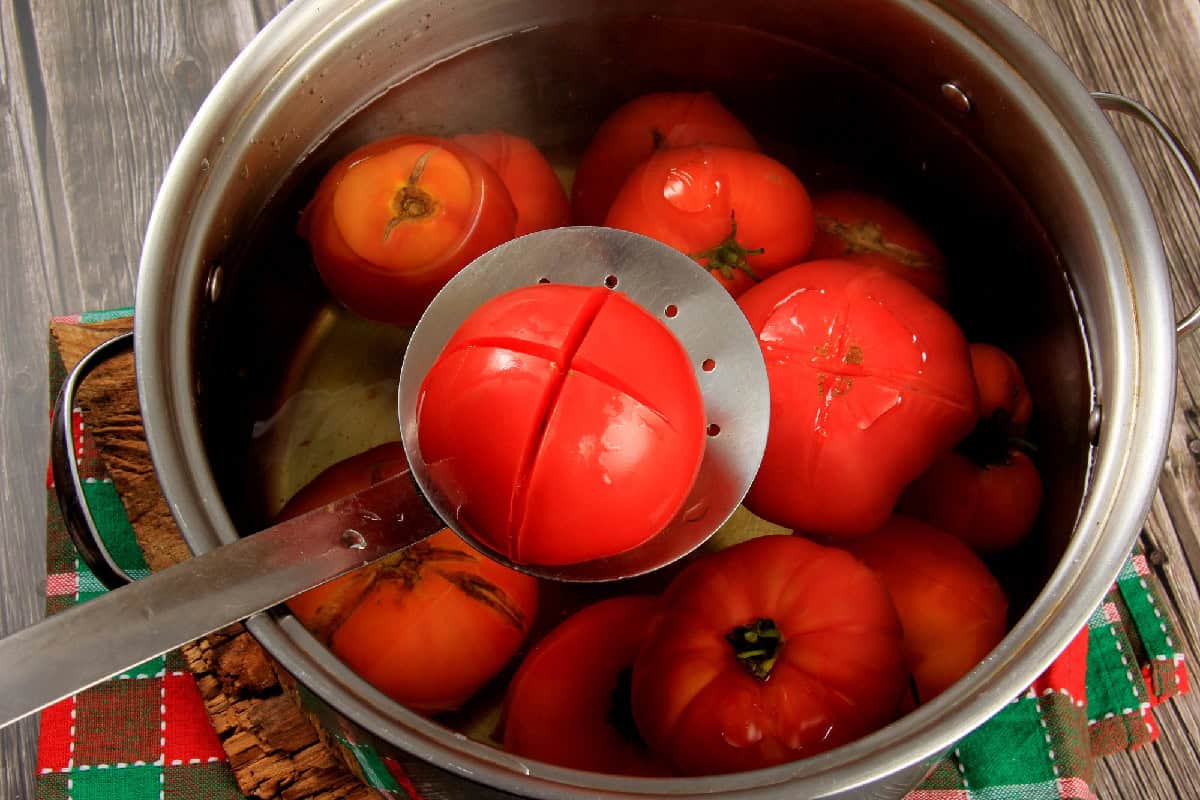
- Slice an X in the skin across the bottom of the tomatoes.
- Set the tomato on the slotted spoon and dip the spoon into the boiling water.
- Let the tomato sit in the boiling water for 30 to 60 seconds. Look for the skin to start peeling up around the score marks.
- Then, scoop it out of the water and plunge it into the ice-water bath.
- While the tomato is chilling, add another one to the pot; don’t forget to put the tomatoes in the boiling water.
- Let the tomato sit in the cold water until it is cool enough to handle.
- The skin will have peeled up from the cooking, so you can simply use your hands to finish peeling it off.
- Once peeled, trim out the stem.
- Set the peeled tomatoes aside until the rest of the tomatoes are peeled.
- After peeling, cut the tomatoes in half and gently remove the seeds.
- Use the peeled tomatoes however you want or need to.
Problems with the tomatoes
Using this method, you can easily peel tomatoes even if you’ve never peeled them before. If a stubborn bit of skin remains, just grab a small paring knife to gently trim it off — no need to stress. The key is not perfection, but preparation.
How to use peeled tomatoes
Once tomatoes are peeled, they can be used in any recipe that calls for canned tomatoes, crushed tomatoes, or stewed tomatoes in any of your recipes. Skip the cans — fresh peeled tomatoes are flavorful, customizable, and just as convenient.
- For crushed tomatoes: use your hands or a spoon to mash them to the desired texture.
- For recipes needing diced tomatoes: simply dice your fresh peeled ones.
- For stewed tomatoes: leave them whole or cut them into chunks.
Try using your homemade peeled tomatoes in place of Rotel or spaghetti sauce as well. For this Creamy Chicken Taco Soup you can add the equivalent of the called for Rotel and add some red pepper flakes for a little heat. If replacing spaghetti or pasta sauce add Italian seasoning, salt, and a pinch of sugar. Making pizza? Simmer crushed tomatoes with garlic, olive oil, salt, and dried herbs for a rustic, delicious sauce.
Taste your recipes
Be sure to taste your recipes when using fresh peeled tomatoes. Since they’re not processed with any salt, your recipes will probably need extra salt and even some extra herbs. A few pinches of salt or a sprinkle of dried oregano can go a long way. Since you’re already cooking, this is an easy problem to solve.
“Sauce tomatoes like paisano or San Marzano are best used after peeling! While using a food mill can help peel and purée the tomatoes for sauces, peeling the skins is a must if you want a silky smooth sauce!”
–Shruthi Baskin-Makanju, Urban Farmie
Final thoughts
Peeling tomatoes may seem like a chore, but it’s a small step that makes a big difference. The flavor and texture that fresh tomatoes bring to your recipes is unbeatable, and learning how to prepare them like a pro only adds to your kitchen confidence. Throw on your apron and embrace this satisfying, old-school cooking skill — your sauces, soups, and stews will thank you.