Have you ever cut open a pumpkin and taken a good look at everything inside? Most of us are familiar with the bright orange outside, especially when pumpkins start appearing everywhere around Halloween. But beneath that colorful skin lie several layers and textures, each with its own name and purpose.
Learning the parts of a pumpkin is a simple way to understand this familiar fall favorite a little better. On the outside, there is the stem, skin, ribs, and blossom end. Cut it open, and you will find the flesh, stringy pulp, and lots of pumpkin seeds.
Whether you’re helping a child with a fall science activity, looking for a pumpkin diagram, or simply curious about what’s inside a pumpkin, here is an easy look at pumpkin anatomy from the outside in.
What Are the Parts of a Pumpkin?
The main parts of the pumpkin can be divided into exterior and interior parts. The outside includes the stem, skin or rind, ribs, and blossom end. Inside the pumpkin, you will find the flesh, pulp, fibrous strands, and seeds.
Cutting a pumpkin makes these parts easy to see. That’s why a parts-of-a-pumpkin diagram usually shows a pumpkin sliced in half. Seeing a real pumpkin alongside a labeled picture can make the terms much easier to understand.
Outside Parts of a Pumpkin
Before cutting into a pumpkin, take a look at its exterior. There is more to notice than its familiar orange color.
Stem: The stem is the firm piece at the top of the pumpkin. While the pumpkin is growing, the stem connects it to the vine. After harvesting, the stem becomes the little “handle” we often associate with pumpkins, although it is better to lift a pumpkin from underneath rather than by its stem.
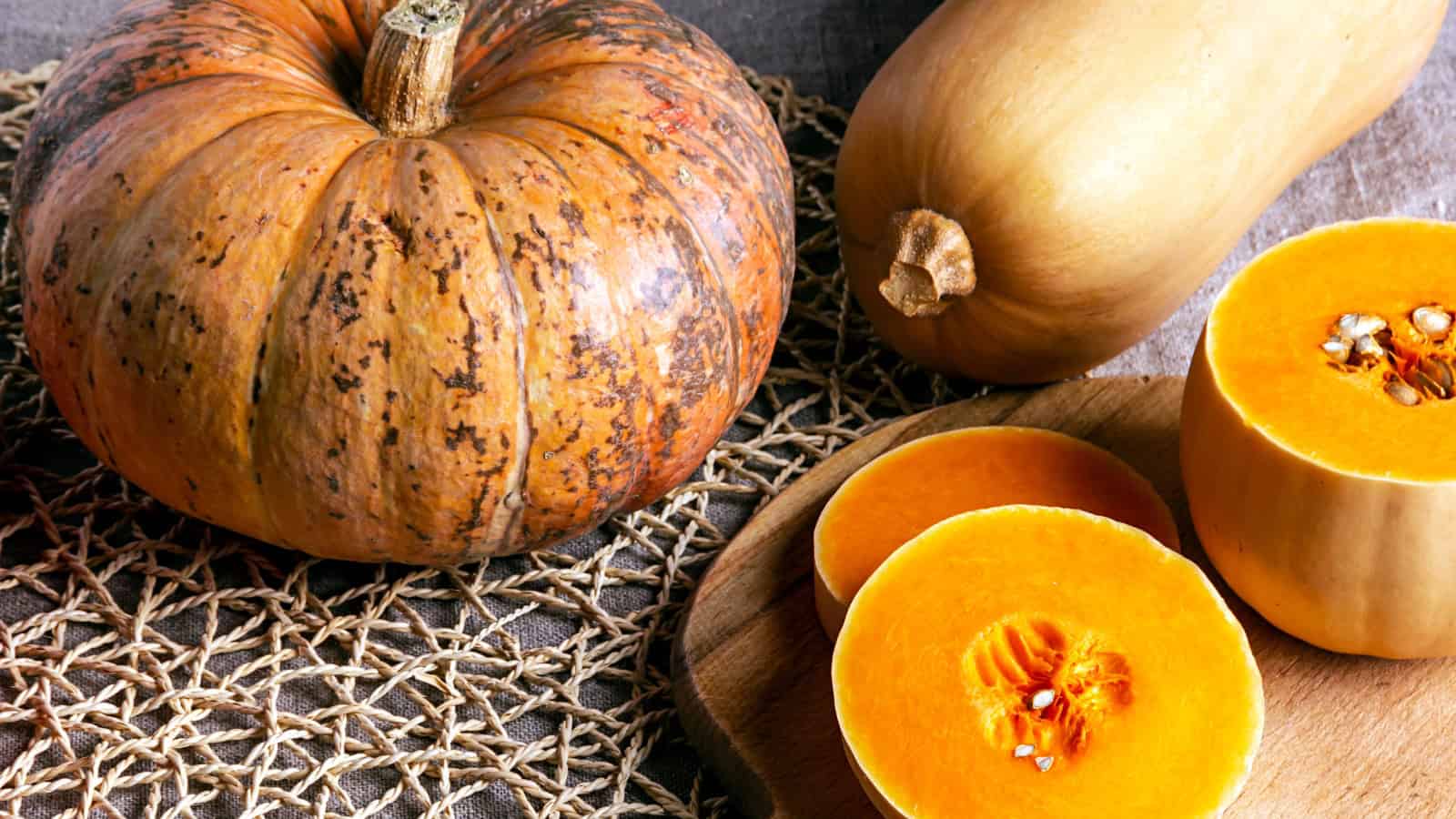
Skin or rind: The tough outer layer is usually called the skin or rind. It protects the softer flesh and seeds inside. Pumpkin skin isn’t always orange, either. Depending on the variety, pumpkins can have white, green, yellow, striped, or even bluish skin.
Ribs: The lines or grooves running vertically around a pumpkin are called ribs. Some pumpkins have very deep ribs, while others are nearly smooth.
Blossom end: Look at the bottom of the pumpkin, opposite the stem, to find the blossom end. This marks the spot where the pumpkin flower was once attached.
These exterior features are easy to include when making a parts-of-a-pumpkin drawing or practicing how to label pumpkin parts.
Inside Parts of a Pumpkin
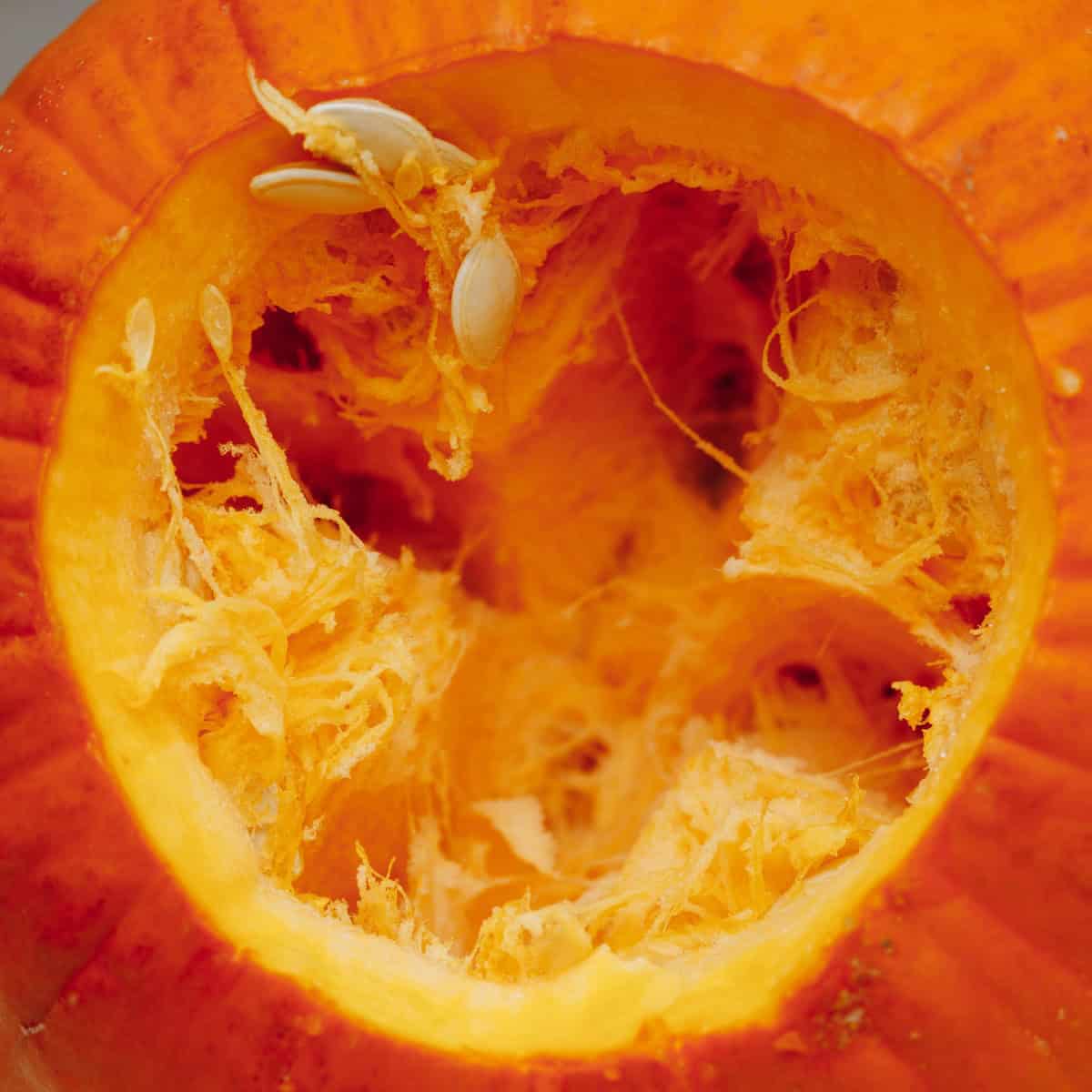
Cutting a pumpkin in half reveals an entirely different set of textures. This is where pumpkin anatomy gets especially interesting.
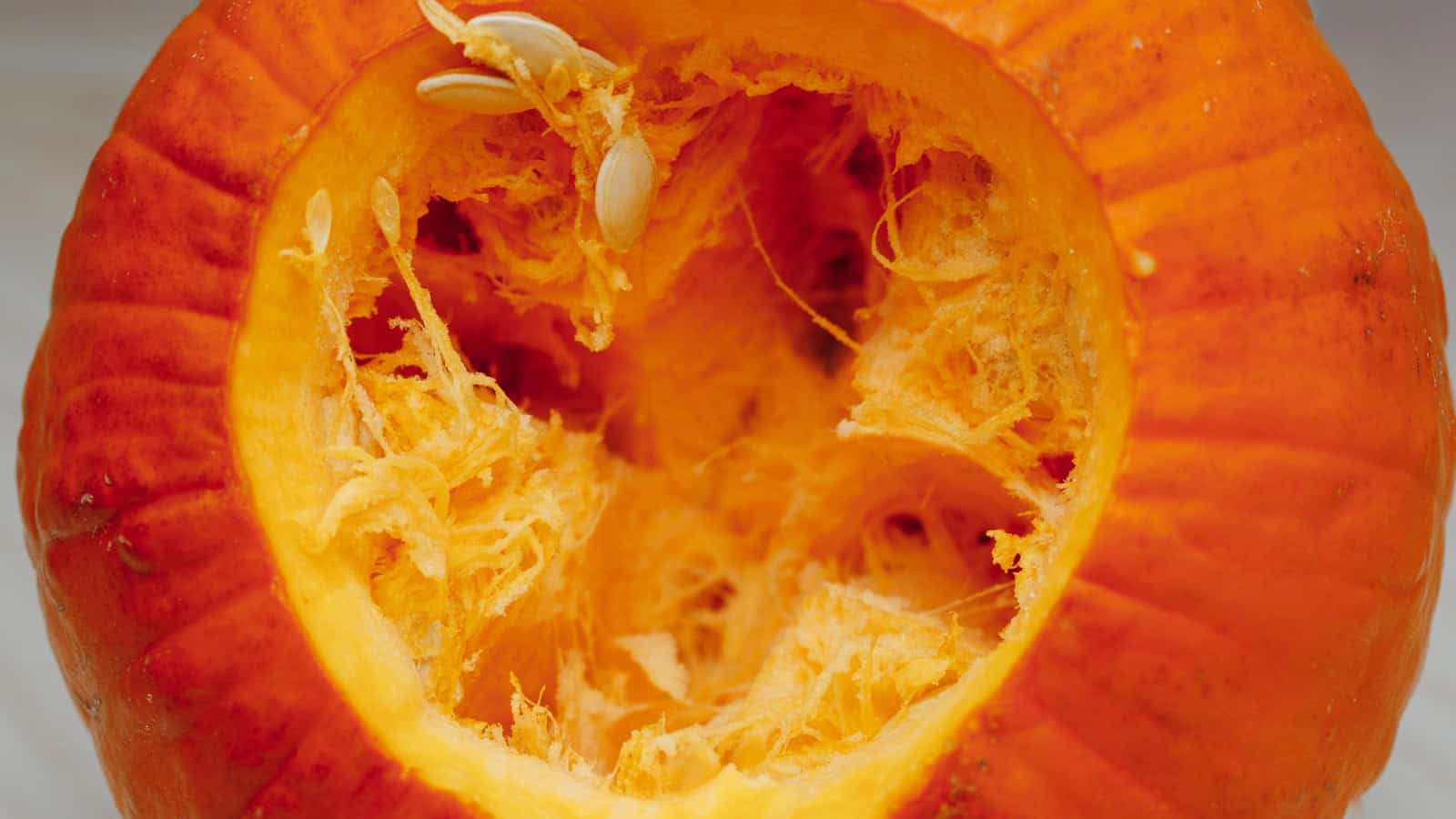
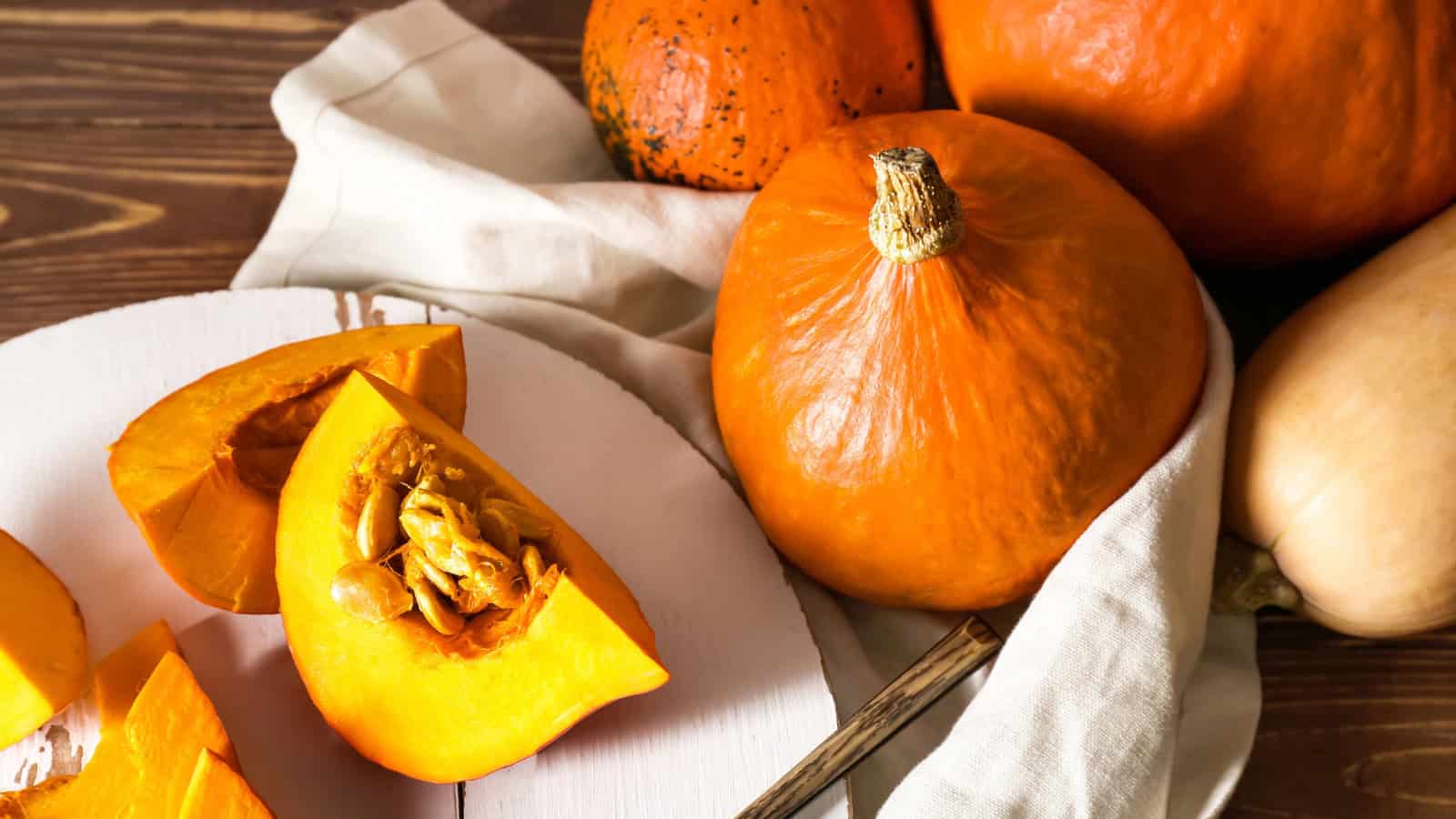
Flesh: The thick layer directly underneath the skin is the flesh. Depending on the variety, it may range from pale yellow to deep orange. This is the part of the pumpkin most commonly cooked and used in recipes.
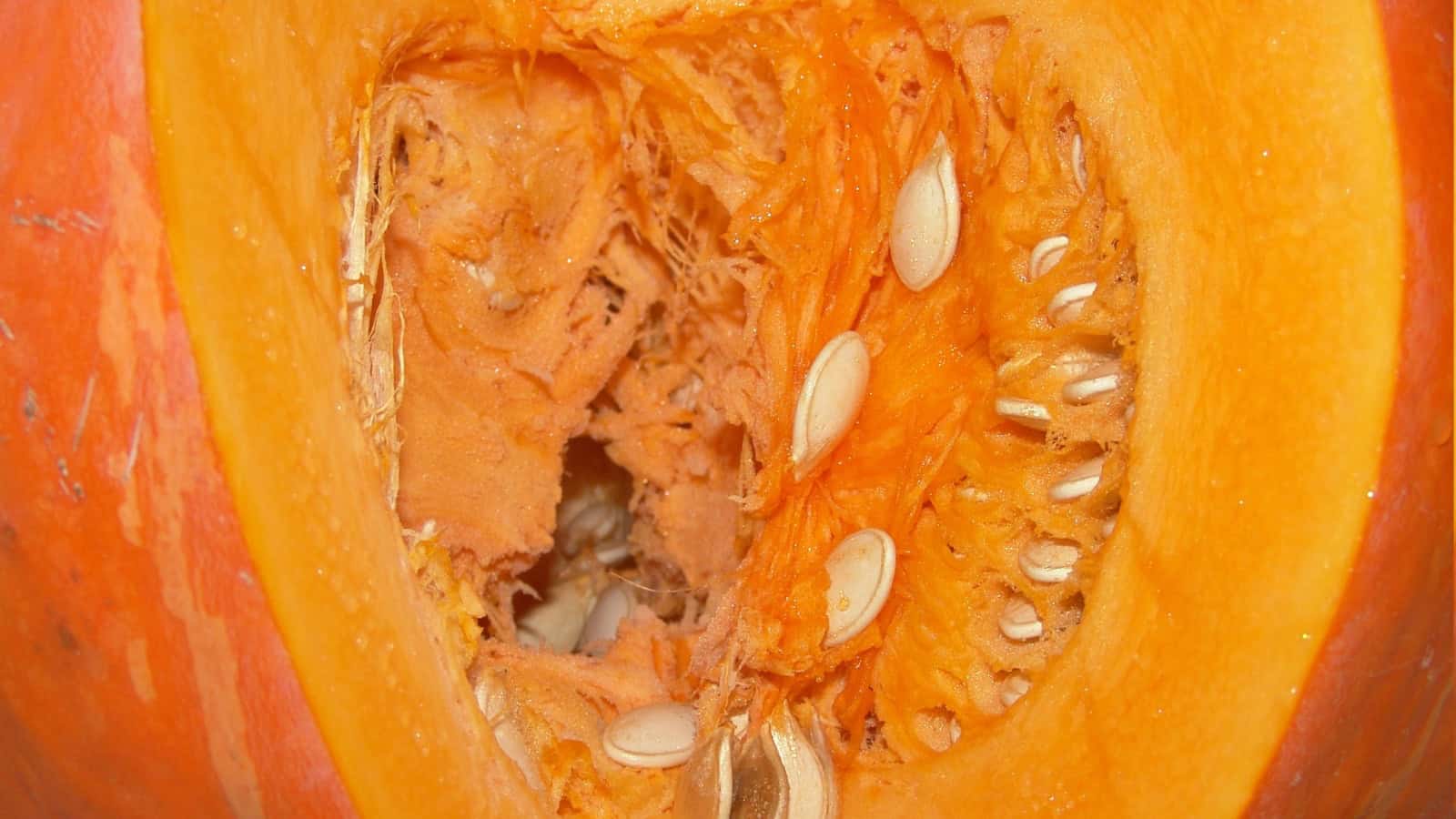
Pulp and fibrous strands: The center contains soft, slippery, stringy material commonly called pulp or fibrous strands. These strands surround and hold the seeds in the central cavity.
Seeds: Tucked among those strands are the pumpkin seeds. Each seed has the potential to grow into another pumpkin plant under the right conditions. They are also edible and can be cleaned, seasoned, and roasted for a crunchy snack.
If you have ever wondered what the parts of a pumpkin are after carving one, the flesh, pulp, and seeds make up most of what you notice inside.
Pumpkin Seeds Are Worth Saving
Don’t be too quick to throw away the seeds when you scoop out a pumpkin. Pumpkin seeds are one of my favorite bonuses of cutting open a fresh pumpkin.
Separate the seeds from the stringy pulp, rinse them well, and let them dry. Then season and roast them until crisp. Salt is the classic choice, but spices can turn them sweet, savory, smoky, or spicy.
Saving the seeds is also a fun way to show kids that different parts of foods can have different uses. Pumpkin flesh can become dinner or dessert, while the seeds become a snack.
Parts of a Pumpkin for Kids
A real pumpkin makes a wonderful hands-on fall science activity because children can see and touch almost every part they are learning about.
Start with the outside and ask your child or student to find the stem, skin, ribs, and blossom end. Then, once an adult safely cuts the pumpkin open, look for the flesh, pulp, fibrous strands, and seeds.
Children can describe how each part feels. The skin is firm, the flesh is dense, and the center is soft and slippery. This makes learning the parts of a pumpkin much more memorable for kids than simply reading the names.
Afterward, have your child draw the parts of a pumpkin and add labels. It’s an easy activity that works especially well during fall or around Halloween.
Using a Pumpkin Diagram or Worksheet
A pumpkin parts diagram helps children learn the name of each section. Most diagrams show a pumpkin cut in half, with lines pointing toward the stem, rind, flesh, pulp, and seeds.
For a classroom or homeschool activity, a parts-of-a-pumpkin worksheet can reinforce what students have already observed. Children can label the parts of a pumpkin, match words to pictures, or color each section.
You may also see resources described as parts of a pumpkin worksheet, parts of a pumpkin PDF, or parts of a pumpkin worksheet PDF. Terminology can vary slightly between educational materials, especially when describing the stringy interior as pulp, strands, or fibers.
For younger children, a simple parts-of-a-pumpkin craft is another fun option. They can create a paper pumpkin that opens to reveal drawn flesh, pulp, and seeds, then practice labeling parts of a pumpkin.
Which Parts of a Pumpkin Can You Eat?
The pumpkin isn’t just interesting to examine; several parts are edible.
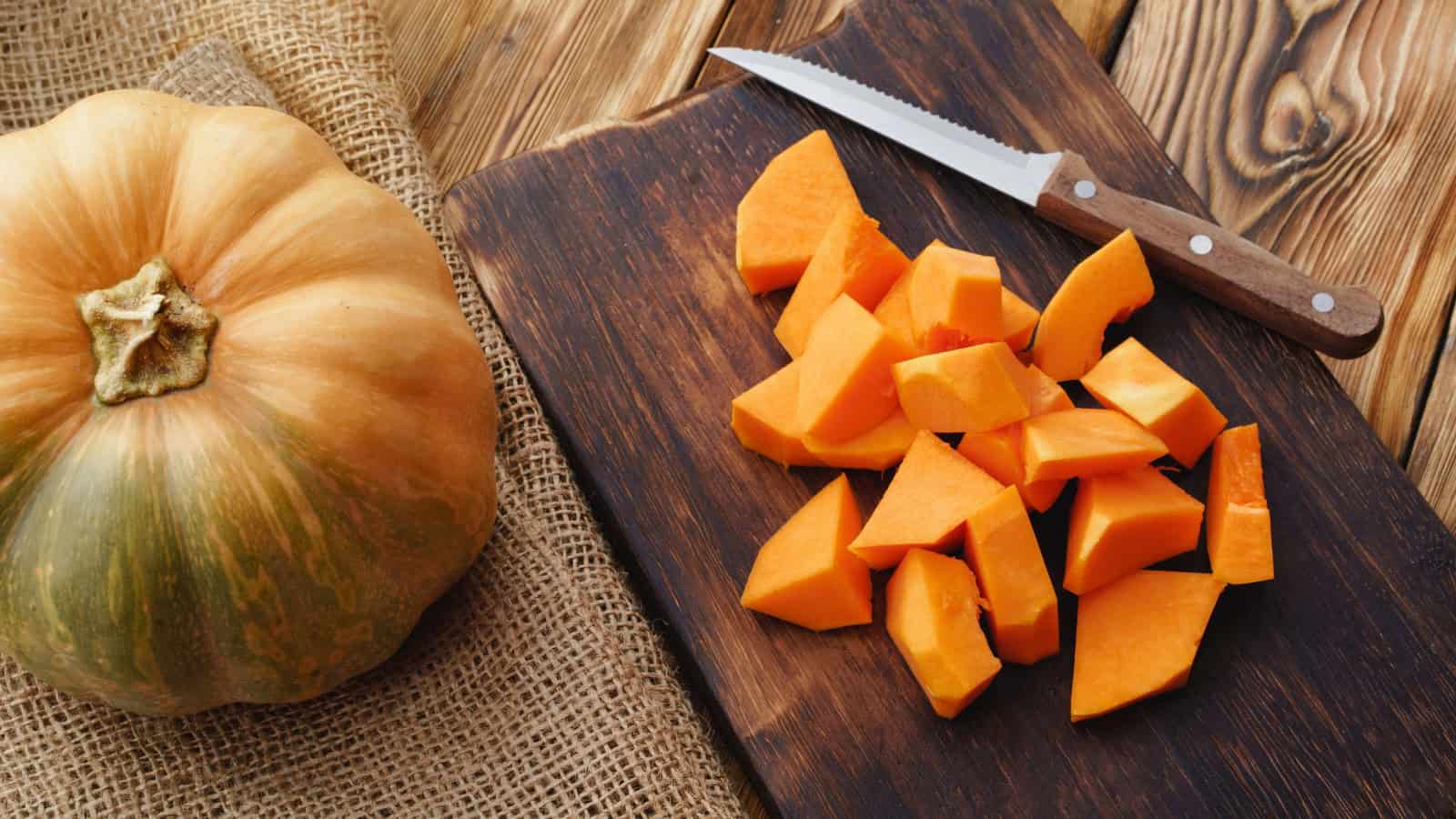
The flesh is what we usually think of when cooking with pumpkin. Once tender, it can be mashed or puréed and used in soups, stir-fry, sauces, baked goods, and other pumpkin recipes.
The seeds are edible too. Roasting them is an easy way to use something that might otherwise end up in the trash.
Some pumpkin varieties also have skin that becomes tender enough to eat after cooking. However, the skin on large carving pumpkins can be quite tough, so whether you leave it on depends on the variety and recipe.
If you plan to cook with a fresh pumpkin, smaller varieties sold as pie or sugar pumpkins generally have sweeter, denser flesh than large Halloween carving pumpkins.
Understanding the Parts of a Pumpkin Diagram
If you are making or reading a pumpkin diagram, you don’t need dozens of labels. A basic pumpkin labeling activity can focus on the easiest-to-identify parts.
For the outside, label the stem, skin, ribs, and blossom end. For the inside, identify the flesh, pulp or fibrous strands, and seeds.
A labeled diagram of a pumpkin’s parts that shows these basic features is enough for most elementary activities. It also gives kids a useful reference when they label parts of a pumpkin themselves.
The easiest way to understand any pumpkin parts diagram, though, is to compare it with the real thing. Cut a pumpkin in half, place it beside the picture, and the labels will suddenly make much more sense.
Final Thoughts
A pumpkin may look simple from the outside, but cutting one open reveals several interesting layers. From the sturdy stem and protective skin to the thick flesh, stringy pulp, and smooth seeds, every section makes up the recognizable anatomy of a pumpkin.
Exploring a pumpkin’s parts can be a fun fall activity for kids, but it’s also useful in the kitchen. Knowing which sections are edible helps you get more from a fresh pumpkin and gives you a good reason to save those delicious seeds instead of tossing them away.
So, the next time you carve a Halloween pumpkin or prepare one for cooking, take a closer look before scooping out the center. There’s much more inside that pumpkin than you might think.
FAQs
The main exterior parts are the stem, skin or rind, ribs, and blossom end. Inside, a pumpkin contains flesh, pulp or fibrous strands, and seeds.
The stringy material is commonly called pulp or fibrous strands. It surrounds the seeds in the pumpkin’s central cavity.
Pumpkin flesh is the thick layer between the outer skin and the central seed cavity. It is the main edible portion used for purées, soups, baked goods, and many other recipes.
Pumpkin seeds are the flat seeds found inside the central cavity. You can save them for planting or clean and roast them for eating.